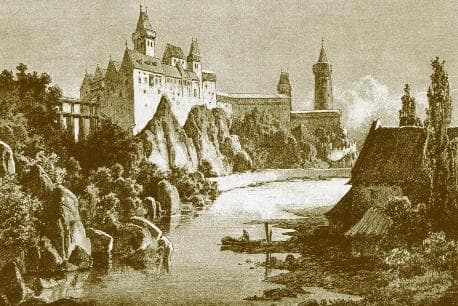

When you move to a new country, at first everything seems like background noise: unfamiliar street names, confusing holidays, strange reactions from locals to certain words. But behind all this is history – long, rich, and very alive. The Czech Republic is one of those countries where the past is literally built into the present: in architecture, in mentality, in politics. It's impossible to understand why Czechs are the way they are without at least a general introduction to what this land has been through.
The Czech Republic is a state in Central Europe, comprising three historical regions: Bohemia, Moravia, and a part of Silesia. Each of these regions has its own character and self-awareness. Bohemia, with Prague, is the political and cultural center. Moravia is more traditional, with strong folk roots and well-known winemaking. Silesia is an industrial northeastern region with Polish and German historical traces.
Czechoslovakia was a crossroads of European paths: the combination of favorable geographical factors made these lands a meeting place for peoples, cultures, and armies for millennia. It is this central location that explains why so much has happened here.
From Tribes to a Kingdom
From the 6th century, Slavic tribes settled in the territory of present-day Czechia. In the 7th century, they created the Samo principality – the first political entity in the region. From 820, this territory became part of the Great Moravia state.
The first ruler of Great Moravia was Mojmir I. The next ruler, Rastislav, invited missionaries Cyril and Methodius in 863. Thanks to their efforts, Byzantium granted the Moravians the privilege of worshiping in Old Church Slavonic and using the Glagolitic script developed by Cyril. It was then that writing first appeared in this land – and it was not the Latin alphabet, but the predecessor of Cyrillic.
After the collapse of Great Moravia under Hungarian attacks, power passed to the Přemyslid dynasty, who held it for over four centuries. One of the most prominent figures of this dynasty was Prince Wenceslas I, who was later canonized and is considered the patron saint of Bohemia. The emergence of Prague as the capital of the Czech state is also associated with this period.
In 1212, the Golden Bull of Sicily was signed – an act that confirmed the privileges of the Bohemian kings and abolished Bohemia's vassal dependence on the Holy Roman Empire.
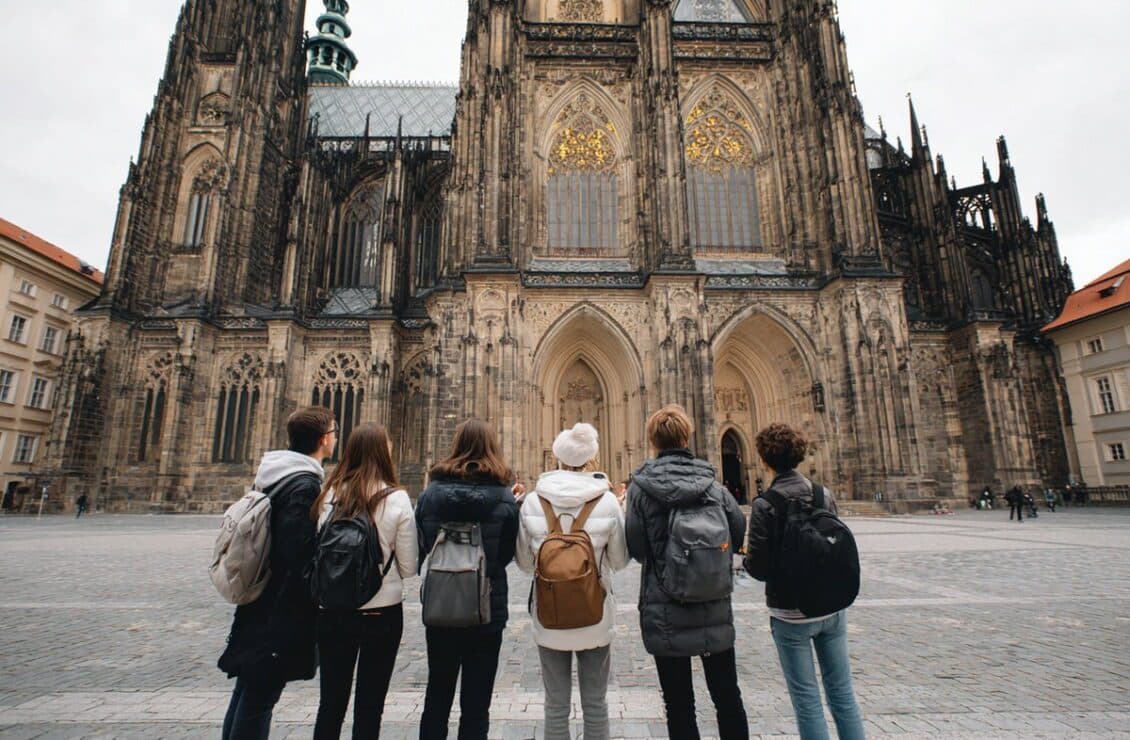
The peak of medieval prosperity occurred during the reign of Charles IV (1346–1378). During this time, Charles University – the first in Central Europe – was founded, as well as Charles Bridge and the magnificent St. Vitus Cathedral in Prague. Prague began to be considered the third city of Christian Europe after Rome and Constantinople. Charles IV transformed Prague into one of the most important cities of Europe at that time – and this legacy is still visible in every tourist guide.

Hussites and Habsburgs. Religion as Politics
In the early 15th century, a conflict erupted in Bohemia that became one of Europe's first examples of a simultaneous religious and national struggle. The theologian Jan Hus spoke out against corruption in the Catholic Church and the dominance of the German clergy. By decision of the church council, which declared him a heretic, Jan Hus was burned at the stake on June 6, 1415. Four years later, anti-German riots began in Prague, escalating into a twenty-year war. The Hussite Wars left a deep mark on the country's history – the church was forced to compromise with the supporters of the Reformation.
After the decline of the Hussite movement, Bohemia came under Habsburg rule. The year 1620 was decisive: in the Battle of White Mountain, the Protestants lost the confrontation, over 30,000 Protestant families were forced to leave the country, and Prague became a provincial town for many years. German became the official language of the state, and all key positions were transferred to Germans.
Czechs call this period the "dark ages" – almost three centuries of forced Germanization, suppressed national identity, and cultural stagnation. This is precisely why the Czech language and its preservation later became a symbol of national survival.
National Revival and the Birth of a Republic
In the 19th century, a wave of national movements swept across Europe – and the Czech lands were not spared. Throughout the 19th century, the prerequisites for the creation of a unified Czechoslovak state were formed. The great Austro-Hungarian Empire was entering the final phase of its existence, which simultaneously became an era of national revival for many Slavic peoples inhabiting it, including Czechs and Moravians.
Politicians, scientists, and writers purposefully revived the language, culture, and historical consciousness. National theaters were built, grammars of the Czech language were written, and historical myths about the greatness of Bohemia were created – sometimes even with a touch of artistic fiction.
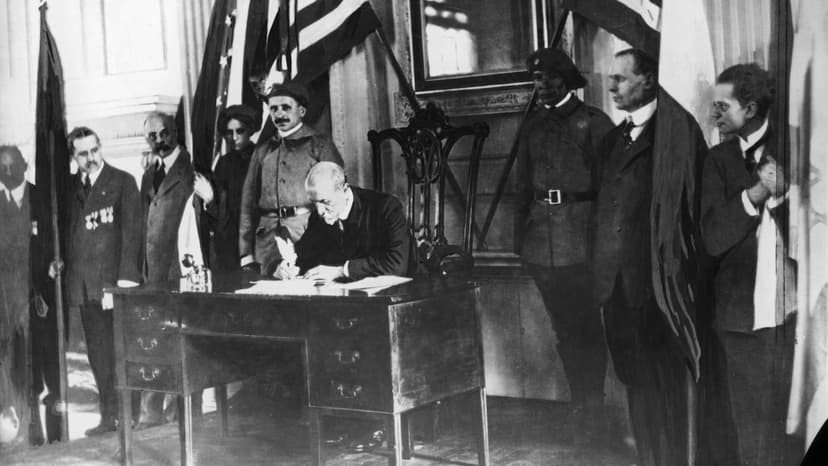
All this led to a result. After the end of World War I, on October 28, 1918, the Czechoslovak Republic was proclaimed in Prague. The new state was headed by the philosopher and politician Tomáš Garrigue Masaryk – a man who became a symbol of Czech democracy. The "First Republic" of 1918–1938 is still perceived by Czechs as a kind of golden standard of statehood: a developed economy, civil liberties, and cultural flourishing.
The Darkest Years 1938–1945
The Munich Agreement of 1938 became an unhealed wound for the Czechs. Great Britain and France, without the participation of Czechoslovakia itself, agreed to transfer the Sudetenland – border regions with a significant German population – to Germany. Hitler finally occupied the country in 1939. Czechoslovakia was destroyed without a single shot – betrayed by its allies.
During the occupation years, the "Protectorate of Bohemia and Moravia" was established in the Czech lands – a formally autonomous territory under the full control of Nazi Germany. Jews, intellectuals, and political opponents were persecuted and exterminated. In 1942, the entire village of Lidice in a Prague suburb was completely destroyed – in response to the assassination of Nazi official Reinhard Heydrich by Czech paratroopers. This event became one of the symbols of Nazi terror.
After the war, about three million Sudeten Germans were expelled from Czechoslovakia – the so-called "expulsion" (Czech: odsun). The issue remains painful in Czech-German relations.
Communist Czechoslovakia 1948–1989
In February 1948, the communists, with the support of Moscow, seized power in the country. Nationalization, political repression, and the destruction of civil society began. Czechoslovakia became part of the Soviet bloc.
Prague Spring, 1968
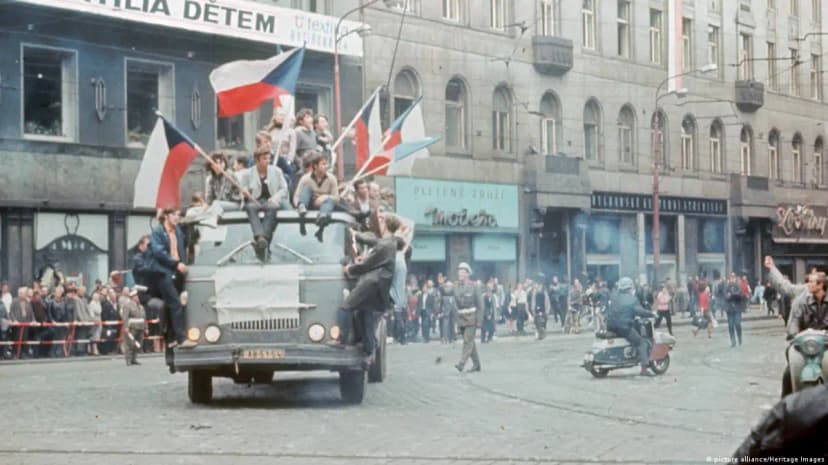
The Prague Spring was a period of liberalization in the Czechoslovak Socialist Republic (ČSSR) from December 1967 to August 1968, associated with the election of Alexander Dubček as First Secretary of the Central Committee of the Communist Party and his reforms aimed at expanding citizens' rights and freedoms and decentralizing power. The period ended with the military occupation of the country by Warsaw Pact troops.
All that the ideologues of the "Prague Spring" wanted was to carry out a set of internal reforms aimed at building socialism with a "human face." There was no question of joining NATO. Nevertheless, on the night of August 20-21, 1968, troops from five Warsaw Pact countries entered the country. The reforms were suppressed, and Dubček was removed from power. The country plunged into a period of "normalization" – a return to a rigid Soviet course.
Charter 77 and the Path to Freedom
In 1977, a group of intellectuals and dissidents – including playwright Václav Havel – signed "Charter 77," a document demanding respect for human rights. The authorities persecuted the signatories, but the movement did not stop: it became the moral foundation for the future revolution.
Velvet Revolution, 1989
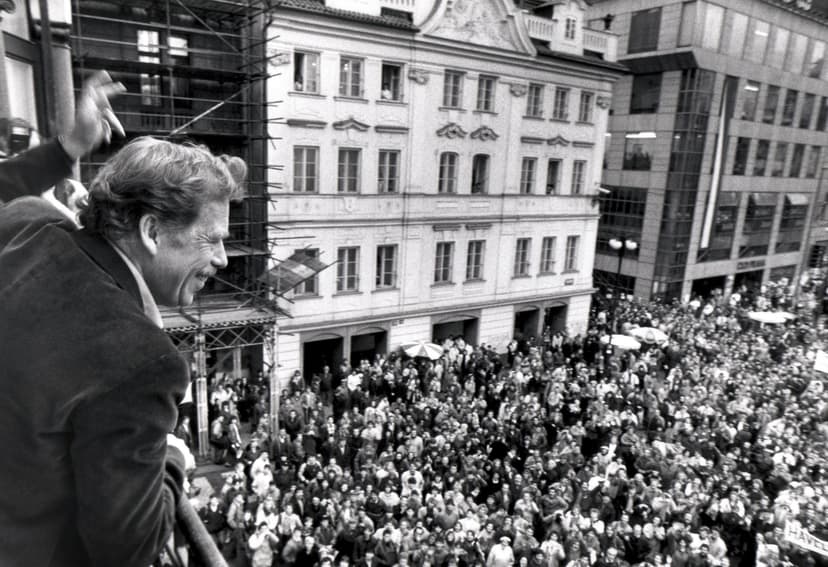
The Velvet Revolution, which unfolded in Czechoslovakia in late 1989, became one of the most striking examples of the peaceful overthrow of a totalitarian regime – without a single shot, only by the force of mass protests. Beginning with a student demonstration on November 17, the protests quickly grew into a nationwide movement led by Václav Havel. On December 10, 1989, President Gustáv Husák resigned, and a new coalition government was formed, in which communists and the opposition received an equal number of seats. Václav Havel – a former dissident and political prisoner – became president of the country.
New Czechia: From 1993 to Today
Velvet Divorce
After the revolution, it became clear that Czechs and Slovaks had different visions for the future. The dissolution of Czechoslovakia was one of the most peaceful and organized state divisions in modern history. On January 1, 1993, two independent states – the Czech Republic and Slovakia – were formed without conflict or violence. This division was called the "Velvet Divorce" – by analogy with the Velvet Revolution. Notably, no referendum was held: the decision was made by politicians.
Integration into Europe
Independent Czechia moved westward from the very beginning. In 1999, the country joined NATO, and in 2004, the European Union. The topic of the Prague Spring became one of the key arguments for the necessity of Czechia's accession to the EU and NATO. The historical memory of Soviet tanks in 1968 turned into a political argument: never again.
Czechia Today
The president of the country since March 2023 is Petr Pavel, a former high-ranking NATO general. The head of government since December 2025 is Andrej Babiš.
Following the parliamentary elections of 2025, Babiš's ANO party received the largest number of votes – about 34.5%. After returning to power, Babiš pursues a cautious foreign policy line focused on coordination with allies and minimizing costs for the domestic economy. Ideological tension persists between President Pavel – a consistent supporter of Western integration and support for Ukraine – and the Babiš government, which continues to shape the country's domestic political agenda.

What History Means for Life in the Czech Republic Today
The history of the Czech Republic is not a museum exhibit; it lives in everyday habits and societal attitudes. It is useful to understand a few things.
Distrust of authority is a persistent trait of the Czech mentality. Centuries under the Austrians, then German occupation, then the Soviet regime – all this fostered a habit of staying away from the state and not believing official statements. The famous Czech humor, with its self-irony and skepticism, grew precisely from this ground.
Attitude towards religion. According to the 2021 census, 56.9% of the Czech population does not identify with any religion. The Czech Republic is one of the most secular countries in Europe. The roots of this lie in the Hussite movement, in the forced Catholicization after 1620, and in communist atheism. Religion here is a private matter, not a public identity.
Attitude towards Russia. The Prague Spring of 1968 is not just a textbook page; it is a living trauma. Many older Czechs remember the Soviet tanks personally. Therefore, the attitude towards Russia in the Czech Republic has historically been cautious – and the events after 2022 have only intensified this attitude.
Pride in language. The Czech language was in danger of disappearing during the period of Germanization. Its revival in the 19th century became a national project. That is why Czechs value their language so much — and will be happy if you try to learn at least a few words.
Bohemia and Moravia are different worlds. If you live in Prague — it's one thing. If you live in Brno or in a village in South Moravia — it's another. Regional identity is very strong here, and a Moravian person does not necessarily identify with the "typical Czech" from the capital.
The Czech Republic is a small country with a big history. Over a thousand years, it has been a powerful kingdom, a province of foreign empires, a laboratory for reforms, a victim of occupation, and finally a free state. Each of these experiences has left its mark — in architecture, in language, in people's attitudes towards each other and towards authority. Living here is more interesting when you understand this context. And it is easier when you know where things that initially seem strange come from.