
One of the first things newcomers to the Czech Republic notice is that a car is not necessary here. Trams arrive exactly on time, buses cover even small towns, and the metro in Prague runs from early morning until late at night. The Czech public transport system is one of the most developed in Central Europe, and it's not difficult to figure out. But only if you know a few key things: how the fare zones work, what ticket validation is, how transport in Prague differs from Brno, and how to avoid a fine just by forgetting to press a button.
Public Transport System
In the Czech Republic, public transport is organized using integrated transport systems (IDS — Integrovaný dopravní systém). This means that metro, trams, buses, and trolleybuses work as a single unit: one ticket is valid for all types of transport within defined zones, and transfers do not require additional payment.
Each major region in the Czech Republic has its own transport system with its own operator:
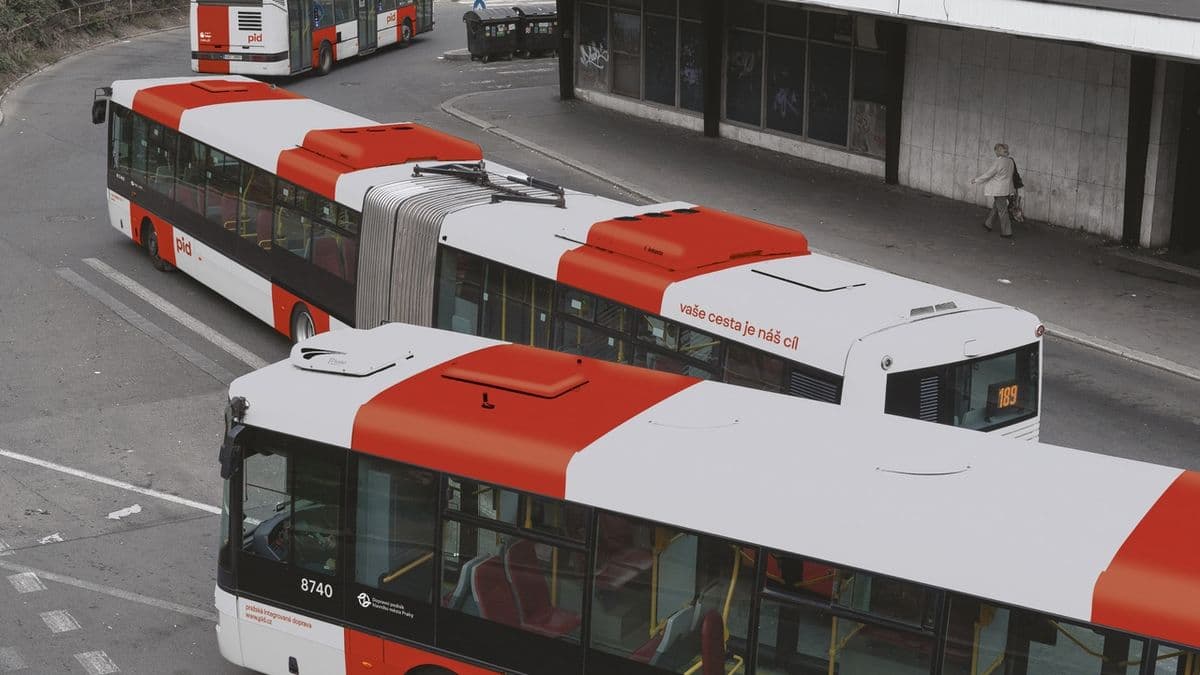
Prague — PID (Pražská integrovaná doprava), the most extensive network in the country.
Brno — IDSJMK (Integrovaný dopravní systém Jihomoravského kraje).
Ostrava — ODIS (Ostravský dopravní integrovaný systém).
Plzeň — PMDP (Plzeňské městské dopravní podniky).
The logic is similar everywhere, but the fares, apps, and cards are unique to each region. It's important to understand this from the start: a travel pass from Prague won't help you in Brno.
Types of Transport
In Czech cities, you will find:
Metro — only in Prague, with three lines.
Trams — the main urban transport in most cities; there are day and night routes.
Trolleybuses — in Brno, Plzeň, Ostrava, and some other cities.
Buses — urban and suburban, operating where there are no rails.
Funicular — in Prague, up Petřín Hill (included in the PID fare system).
River ferries — also in Prague, several routes across the Vltava River.
Types of Tickets
Temporary (Single-Trip) Tickets
The main principle of Czech tickets is payment by time, not by distance. You buy the right to travel on any transport within the ticket's zone for a specified period. You can make transfers, you can change transport types — the main thing is that the time doesn't run out.
In Prague, the following temporary fares are valid in 2026:
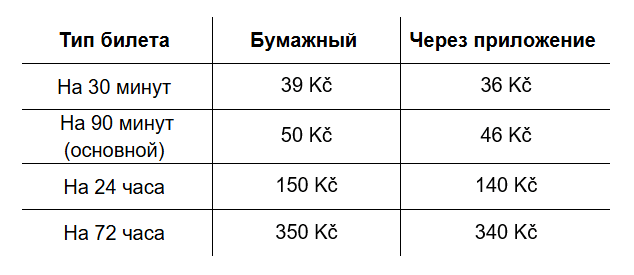
The most popular option is the 90-minute ticket: it covers most trips around the city and allows transfers without extra payment. A 30-minute ticket makes sense only for short, direct trips without transfers — for example, traveling three stops on the metro.
Day and Multi-Day Tickets
If you have just arrived or plan to travel extensively around the city for several consecutive days, it is more economical to buy a day or multi-day ticket. Day and three-day passes are especially convenient if you are staying on the outskirts: they eliminate any need to watch the time.
Long-Term Passes
For those living in the Czech Republic, the main tool is a personalized long-term pass. In Prague, this is the Lítačka system.
Only those living in Prague can get a personalized Lítačka pass — at the public transport information center. It is linked to the individual and cannot be transferred to others.
The cost of a personalized Lítačka pass for 2026 is:
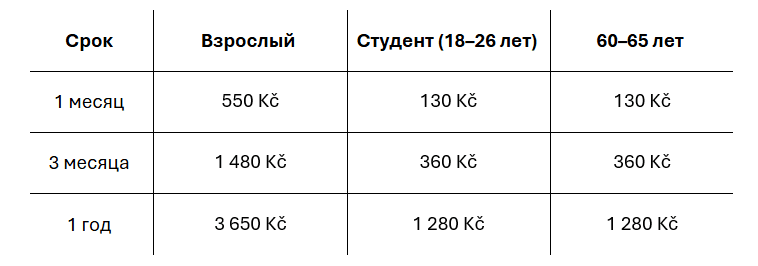
A monthly pass sold without registration costs 1,000 Kč — almost twice as much as a personalized one. This is why getting a Lítačka is one of the first things you should do after moving to Prague.
Discounts and Free Travel
In Prague, the following travel for free:
children under 6 years old;
children from 6 to 15 years old (from age 10, a document confirming age is required);
seniors over 65 years old (a document is also required).
Passengers aged 60 to 65 pay half price — for this, it is enough to present an EU citizen ID or a passport. Students aged 18 to 26 are also entitled to a discount, but an ISIC card or proof of student status via an app is mandatory.
How to Pay for Travel
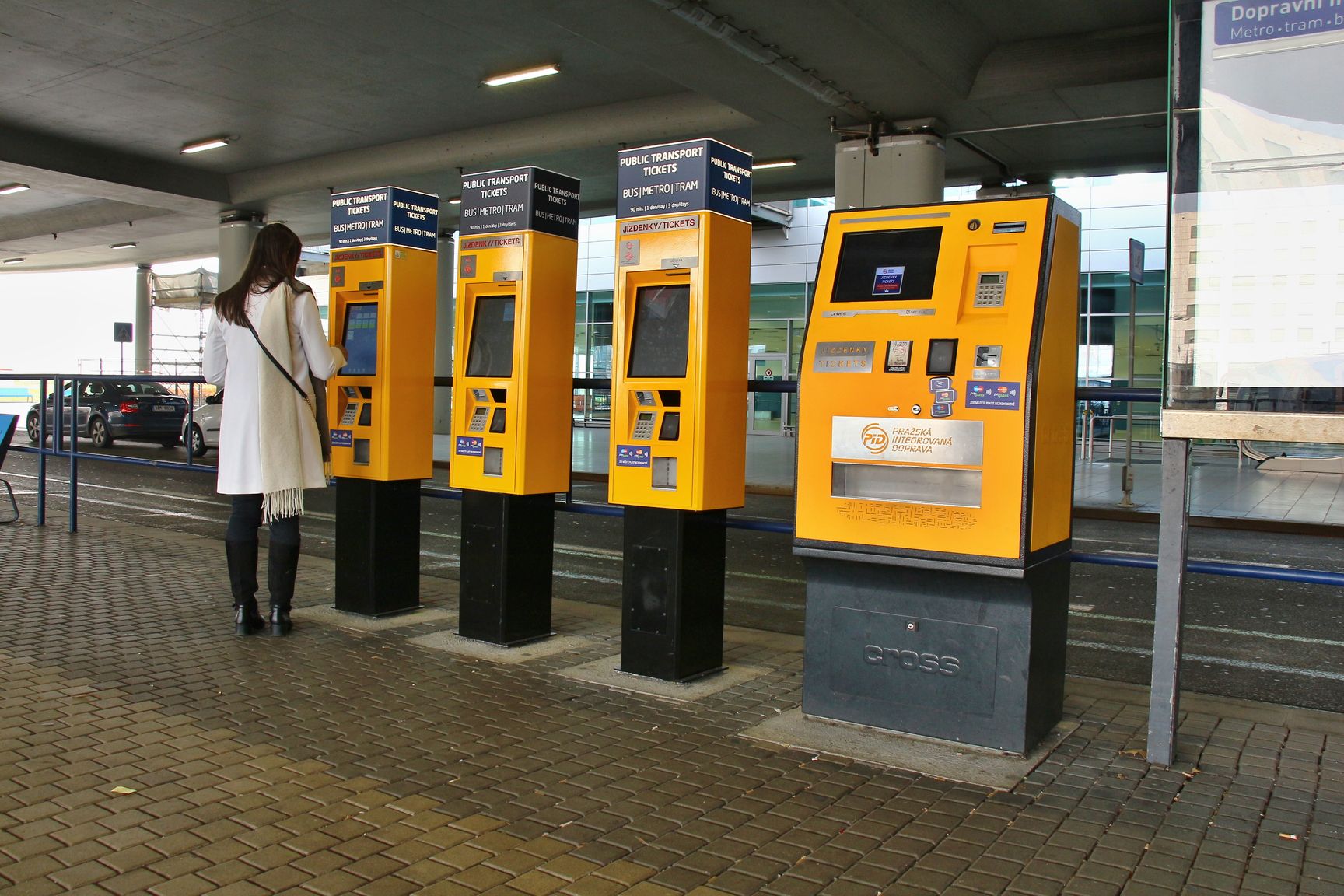
Ticket Machines at Stops and in the Metro
Ticket machines are installed at practically every tram stop and at all metro stations. Older machines only accept coins, while newer ones accept coins and bank cards. Modern machines with card readers are installed, for example, at the airport and Prague's main train station.
All trams also have machines that accept contactless bank cards — their menus are translated into several languages, including Russian.
PID Lítačka Mobile App
The most convenient and cost-effective way to pay in Prague is the PID Lítačka app. Tickets purchased through the app are 4–10 CZK cheaper per trip than paper tickets. The app also allows you to plan routes, view real-time schedules, and manage your personalized pass.
Other cities have similar apps: in Brno, it's the DPMB app; in Ostrava, it's ODISka.
SMS Tickets
Single tickets for 30 and 90 minutes, as well as for 1 and 3 days, can be purchased via SMS by sending the corresponding code to the number 90206. In addition to the ticket price, the cost of the SMS is charged. Important: SMS sending is only possible from a Czech phone number (+420).
Purchasing Elsewhere
Tickets are also sold at Trafiky (newsstands), small shops, hotel reception desks, and metro ticket offices. At metro ticket offices, you can buy a non-personalized monthly pass — they are not available at all stations and often do not operate on weekends.
Validation — The Most Important Part
Buying a ticket is only half the battle. You must validate it, otherwise it is considered invalid.
On buses and trams, yellow validators are located on the handrails. In the metro, validators are located at the entrance to the boarding area. You need to validate the ticket once — upon first boarding. When transferring to another mode of transport, you do not need to validate again. Personalized passes and long-term subscriptions also do not need to be validated; they become valid from the moment of purchase or activation.
If you bought a 90-minute ticket at 11:00 AM and got off after 50 minutes, the remaining time is simply lost — you cannot use it later.

Prague — How the Capital's Transport Works
Prague is the only Czech city with a metro, and its transport network is the most extensive here. The entire system is managed by the PID operator and covers not only the city itself but also extensive suburban areas.
Fare Zones
There are a total of eight fare zones in the Prague system: 0–5, B, and P. The entire center of Prague, the outskirts, all metro lines, trams, and Václav Havel Airport belong to a single fare zone (0, B, P). This means that for travel within the city and to the airport, a standard ticket is sufficient — no additional zone charges are required. Zone surcharges are only relevant when traveling by train far beyond the city limits.
Metro
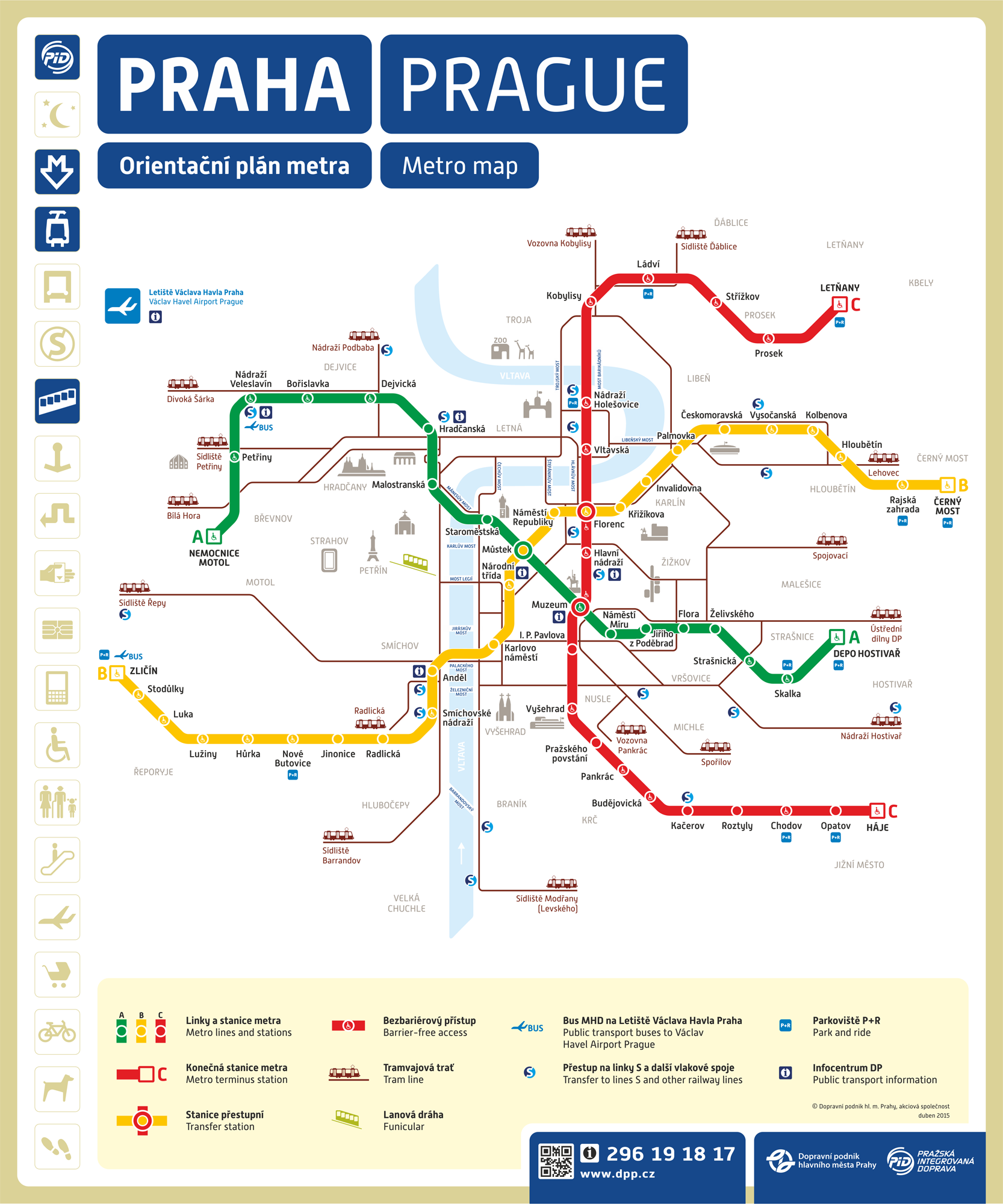
The Prague metro consists of three lines — A (green), B (yellow), and C (red). They intersect at several interchange stations, allowing quick travel from any point to any other.
The metro starts operating at 04:30 AM and finishes at 00:40 AM. The three lines cover most of Prague and are considered the fastest way to get around the capital. During peak hours, the interval between trains is 2–3 minutes; in the evening, it's about 10 minutes.
There are no usual turnstiles at the entrance in the Prague metro — the platforms are open. This is precisely why ticket validation is mandatory: the system relies on trust and checks by controllers.
Trams
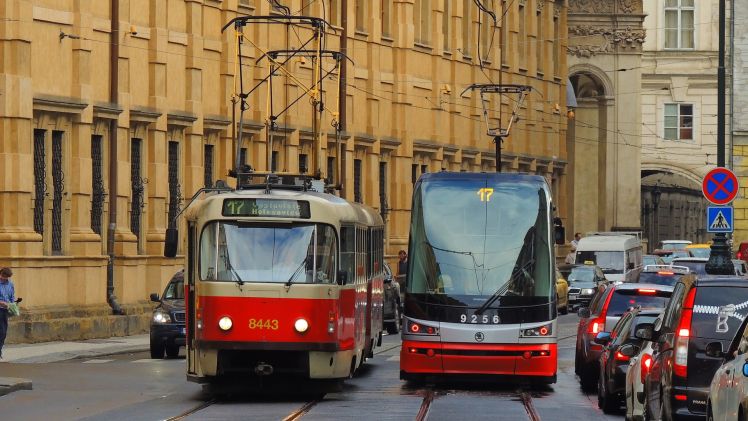
Trams are the heart of Prague. Daytime trams run from 04:30 AM to 01:00 AM with intervals of 8–20 minutes; night trams run from 01:00 AM to 04:30 AM with intervals of about 30 minutes. Night routes are numbered from 91 to 99 and cover key areas of the city.
The historic tram route 41 deserves special mention. It is considered a tourist attraction and runs on weekends along a scenic route through the center, but it requires a separate ticket.
Buses
City buses in Prague complement the tram and metro network where rails are not laid — usually in residential areas and on hilly terrain. All routes are integrated into PID and accept the same tickets.
Funicular and Ferries
Prague's public transport also includes a funicular and ferries across the Vltava. The funicular goes up Petřín Hill and is part of the PID system — a day or 72-hour pass is valid for it, but 30 and 90-minute single tickets are not. Ferries (several routes) accept standard Prague tickets and operate during the day.
Other Major Cities in the Czech Republic
Brno
Brno, the country's second-largest city, has a developed transport network of trams, trolleybuses, and buses. The operator is DPMB (Dopravní podnik města Brna), and the system is integrated into IDSJMK.
Brno is divided into two transport zones: 100 (center) and 101 (outskirts). In practice, most city tickets are valid in both zones simultaneously, so the average passenger doesn't need to worry about this.
Buses in Brno operate around the clock. Night services are less frequent, and daytime headways range from 3 to 20 minutes. At night, the headway can increase to 1 hour.
Transport in Brno runs strictly according to schedule, which is divided into three parts: weekdays, holidays and school breaks, and weekends. Purchased tickets must be validated — the rule is the same as in Prague. Long-term personalized passes in Brno are issued at the central DPMB office.
Ostrava
Ostrava is the third-largest city in the Czech Republic. The transport system operates under the ODIS brand, and the personalized card ODISka is used for storing travel passes. The ODISka card can be ordered online and must be picked up at the DPO office approximately three working days later.
Ostrava has trams, trolleybuses, and buses. Historically, the city developed as an industrial center, and the transport network is oriented towards connecting residential areas with industrial zones.
Plzeň, Olomouc, Liberec, and Small Towns
In Plzeň, there are trams (one of the oldest tram fleets in the Czech Republic) and buses. In Olomouc and Liberec, there are trams and buses, also integrated into regional systems.
In small towns and villages, public transport is usually limited to buses with less frequent headways. It is important to study the timetable here in advance — you might have to wait an hour or two for the next bus.
Important Rules and Nuances
Inspectors and Fines
Ticket inspections on Czech public transport are real and regular. Inspectors work in groups, dressed in plain clothes, and appear without warning.
Inspectors are most often found in the metro, and less often in trams. If you are caught without a ticket, you will be politely asked to pay the fine in cash or by bank card on the spot.
In 2026, the fine for traveling without a ticket in Prague increased to 1,200 CZK. Until recently, it was 1,000 CZK, and the legal maximum limit was raised from 1,500 to 2,500 CZK by an amendment to the law approved by the Czech Senate in April 2025. So, it is definitely not worth saving on a ticket.
Transporting Luggage, Bicycles, and Animals
If you have large luggage (larger than a standard cabin-size suitcase) or a dog with you, you need to pay extra for them – about 23–25 CZK for each item. Small bags and backpacks can be carried for free.
Transporting pets is allowed, but the animal must wear a muzzle and be on a leash, or be in a carrier.
Bicycles can be transported in the metro and some trams during hours when it is not prohibited by the rules – usually outside of rush hour. A separate coupon is also required for a bicycle.
Unspoken Rules on Public Transport
It is important for foreigners to understand a few behavioral norms that are considered obvious in the Czech Republic:
Quiet. It is not customary to talk loudly on public transport, especially on speakerphone.
Give up your seat. Seats are automatically given to elderly people, pregnant women, and people with children – this is the norm, not an exception.
Do not block the doors. Enter the carriage only after everyone who is exiting has left.
Exit first. If you are standing near the door and you are not getting off yet, get off at the stop, let people pass, and then get back on.
Schedule. Public transport in the Czech Republic runs strictly according to the schedule. If it says 14:32, it means 14:32. Arrive at the stop in advance.
Accessibility for Passengers with Reduced Mobility
The Prague metro and most new trams are equipped with elevators and low floors for wheelchairs. However, older metro stations may not have elevators. It is convenient to check information about accessible routes through the PID Lítačka app, which has an accessibility filter.
Useful Apps and Resources
PID Lítačka (Prague) – the official app for Prague public transport. It allows you to buy tickets cheaper than paper ones, plan routes, manage your personal travel pass, and view real-time schedules. Available on iOS and Android.
DPMB (Brno) – an equivalent for Brno: schedules, routes, payment via the app.
Jízdní řády / IDOS – a nationwide database of schedules for all types of transport, from city trams to regional buses. Available on the website and as an app; indispensable for travel between cities or to small towns.
Mapy.cz – a Czech mapping service that is often more accurate than Google Maps for local transport, especially outside of Prague.
Google Maps – a familiar tool, works well for routes in large cities, although sometimes less detailed than Mapy.cz.
Official website of the Prague Public Transit Company – dpp.cz, and the nationwide schedule search engine – idos.cz. You can enter the starting and ending stop, departure time, and get a route with transfers, travel time, and cost.
Czech public transport is a system that is pleasant to use. It is punctual, convenient, covers even those corners that are far to walk to, and with a sensible approach, it is quite inexpensive. The main thing for a foreigner is to figure out tickets in their city in the first few days after moving, download the necessary app, and not forget to validate paper tickets. The rest will come naturally – after a week of travel, you will feel confident using Czech public transport.