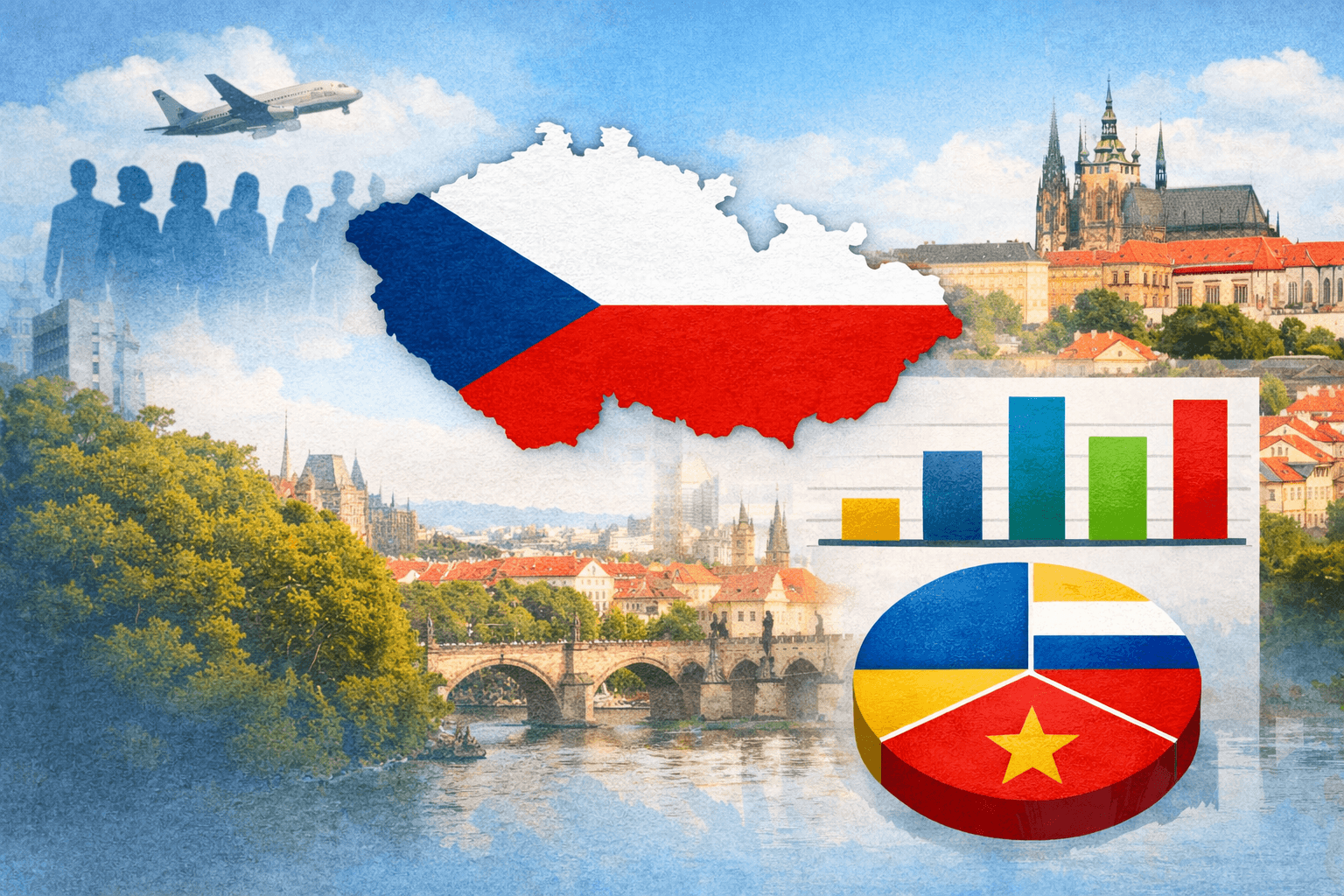
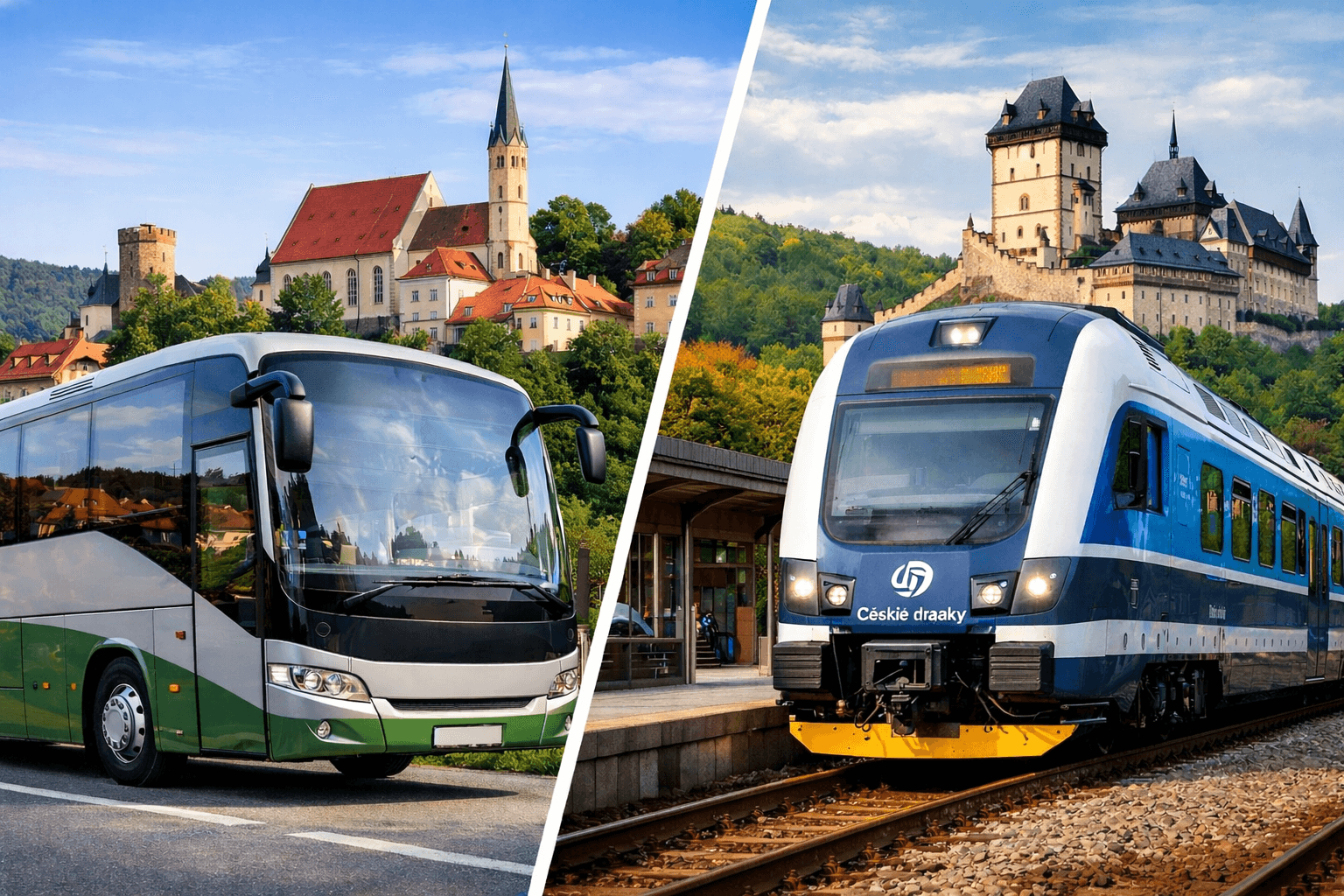

The Czech Republic is a small country, but it has a well-developed transport network. The distance from Prague to Brno is about 200 km, to Ostrava – a little over 300 km, to Pilsen – only 90 km. With these distances, transport is not about air tickets, but about choosing between a train and a bus. And here there are nuances: sometimes a bus will be faster and cheaper, sometimes – the opposite. Let's sort everything out in order.
Operators and their roles
The transport market in the Czech Republic is more interesting than it seems at first glance. State monopoly is long gone – several carriers compete on major routes.
Trains:
České dráhy (ČD) – the national carrier, the largest in the country. The company has almost a two-hundred-year history and is one of the largest employers in the Czech Republic. It covers most routes, including small towns and villages.
RegioJet – a private carrier, known for its yellow trains. High level of service, competitive prices on key routes.
Leo Express – another private player. From March 1, 2026, it extended the Prague–Krakow route to Warsaw, and in June 2026, it plans to launch a new route Prague–Dresden–Leipzig–Frankfurt.
Buses:
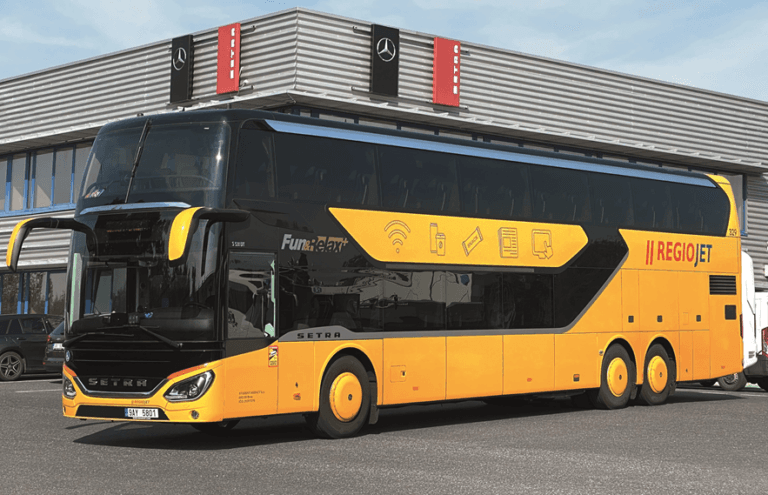
RegioJet Bus – the same carrier, but the bus direction. Yellow buses with onboard entertainment and stewards.
FlixBus – an international operator of green buses, with a wide network of routes throughout Europe.
Gepard Express, Student Agency and dozens of regional carriers – operate on specific routes.
It is important to understand: on popular routes (Prague–Brno, Prague–Ostrava), all these operators compete with each other. This is good news for passengers – competition drives prices down.
When it's better to choose a train
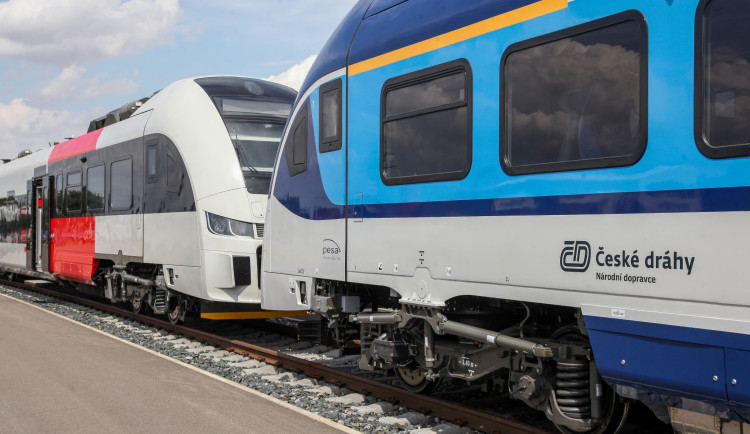
A train in the Czech Republic is convenient where there is direct and high-quality rail service. In 2024, České dráhy carried out a large-scale renewal of its fleet: adding over 50 new train sets, including RegioPanter, RegioFox, and Vectron locomotives, and also launched the first high-speed ComfortJet trains.
Where the train wins:
Prague–Brno: about 2.5 hours of travel, over 25 direct services per day. This is the busiest intercity route in the country, and the train is the obvious choice: fast, frequent, convenient.
Prague–Ostrava: about 3 hours, with a similarly busy schedule. RegioJet, Leo Express, and České dráhy operate on this route.
Prague–Pilsen: less than an hour's journey – so fast that the train simply has no competition.
Prague–Olomouc, Prague–Pardubice and other large cities: regular direct connections several times an hour.
Types of ČD trains worth knowing about:
Os (osobní vlak) – regional, stops everywhere, slowest.
Sp (spěšný vlak) – express regional.
R (rychlík) – express, stops in large cities.
Ex / IC / EC – high-speed and international connections.
SC Pendolino – the flagship high-speed train on the Prague–Ostrava route. Since December 2025, seat reservations on Pendolino have become significantly cheaper: the cost is unified to 35 CZK for all routes and classes, and when buying online, the reservation is free.
Disadvantages of trains: railways often do not reach small villages at all. Prices have been rising in recent years: with the introduction of the new schedule in December 2025, České dráhy increased tariffs by approximately 2.5–3.5%.
Buses: when it's more profitable and convenient
Do not underestimate the bus. On some routes, it beats the train in both speed and price.
Where the bus wins:
Small towns and villages: many settlements simply do not have a railway. The only connection to the outside world is a regional bus. This is perhaps the main advantage of bus transport for those who do not live in a big city.
Prague–Brno (on competitive tariffs): with advance purchase, a RegioJet or FlixBus bus can be noticeably cheaper than a train – with a comparable travel time.
Prague–Karlovy Vary: there is no direct train, and the bus takes about 2 hours. One of the few routes where the bus is the only comfortable option.
International routes: FlixBus and RegioJet Bus connect Czech cities with Vienna, Bratislava, Warsaw, Berlin, and many other European cities at very competitive prices.
About comfort: RegioJet buses deserve special mention. There is a steward on board, Wi-Fi, USB chargers, and sometimes a small snack. FlixBus is a bit more modest, but also offers Wi-Fi and power outlets.
Disadvantages of buses: dependence on traffic jams (especially when entering Prague), the inability to accurately predict arrival time during peak hours, and sometimes inconvenient locations of bus terminals relative to the city center.
Buying tickets
For trains:
cd.cz – the official website of České dráhy. The most complete schedule, online ticket purchase, discount promotions.
regiojet.cz – RegioJet website for trains and buses.
leoexpress.com – Leo Express website.
idos.cz – an aggregator of schedules for all transport in the Czech Republic (trains, buses, public transport). The interface is available in Czech, German, and English. The database covers suburban, intercity, and international transport, as well as urban routes. It is impossible to buy a ticket on idos.cz – it is purely a schedule aggregator, but an indispensable planning tool.
For buses:
regiojet.cz – yellow buses, convenient purchase.
flixbus.cz – international network of green buses.
Applications:
Můj vlak (My Train) – the official application of České dráhy. Ticket purchase, schedule, delay notifications.
RegioJet – application for trains and buses of one operator.
IDOS – mobile version of the schedule aggregator. Combines train, bus, and public transport schedules throughout the Czech Republic.
PID Lítačka – indispensable for living in Prague and the Central Bohemian Region.
Buying tickets online is almost always cheaper than at the ticket office – especially with České dráhy, where booking a seat is free when buying through the app or website.
How to catch a cheap ticket
RegioJet, Leo Express, and FlixBus all operate on a dynamic pricing principle – the earlier you buy, the cheaper it is. Tickets can be purchased up to 180 days before the trip. In practice, this means: if you know you will be traveling to Ostrava in a month – buy now.
Several practical tips:
Avoid Friday evenings and Sunday afternoons – these are peak hours when cheap seats are snapped up first.
České dráhy has introduced a 25% ČD DAYS discount for groups of 2 to 5 people when buying online for domestic routes. If you are traveling with a friend, colleague, or partner – this is a significant saving.
Watch out for promotions: all three private operators periodically hold sales with tickets at symbolic prices.
If you see a schedule in Czech – here are the key words: odjezd – departure, příjezd – arrival, přestup – transfer, kolej – track/platform, zpožděný – delayed, zrušený – canceled.
Passes and cards for regular travel
If you live in the Czech Republic and travel regularly, single tickets are not for you. There is an extensive system of long-term passes here.
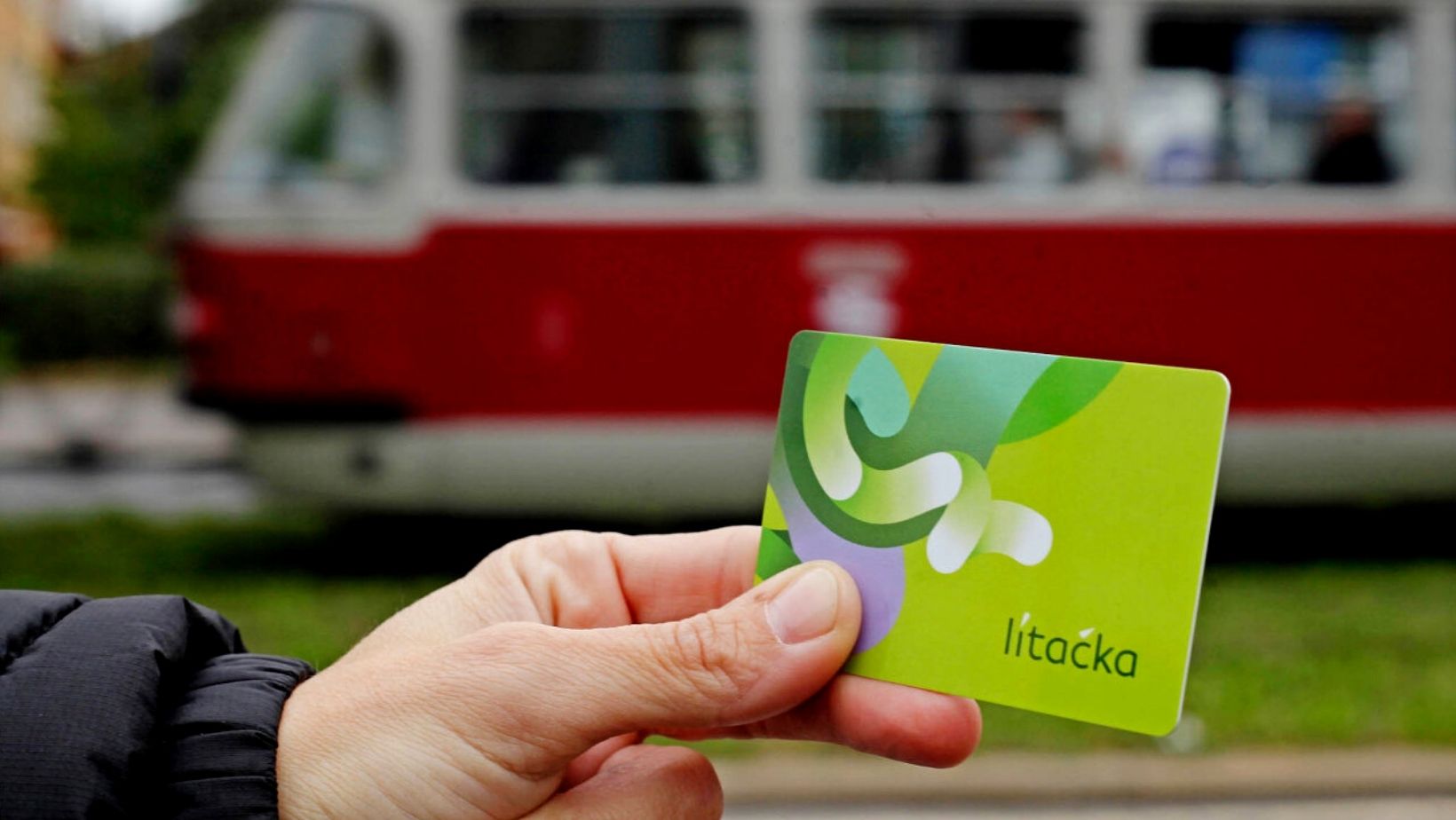
Lítačka – the key card for those living in Prague or the Central Bohemian Region. It is both a card and a mobile app – with its help, you can buy both single tickets and passes. A monthly pass for an adult costs 550 CZK, a quarterly pass – 1,480 CZK, an annual pass – 3,650 CZK. The pass is valid on all transport in the PID system: metro, trams, buses, city trains, and even ferries across the Vltava.
An important point: in 2026, two tariffs will actually be in effect in Prague. A paper ticket from a machine for 30 minutes costs 39 CZK, for 90 minutes – 50 CZK. Through the Lítačka app, the same tickets will be cheaper: 36 and 46 CZK respectively. The difference on each trip is small, but it adds up over a month.
Other regions of the country have their own integrated systems – Integrovaný dopravní systém (IDS) – with their own passes. For example, in the South Moravian Region, it is IDS JMK, in the Ostrava region – ODISka. The principle is the same everywhere: a single pass covers all types of transport in the region.
Practical nuances for migrants
Luggage and bicycle
On České dráhy trains, you can transport briefcases, laptops, backpacks, small suitcases, and bags for free. The maximum size of an item is 90×60×40 cm, the maximum weight is 50 kg, provided that the passenger can carry it independently. Bicycles are transported in specially designated carriages, usually for an additional small fee – check with the specific operator.
Inspectors and fines
Inspectors on Czech transport work in plain clothes and appear without warning – both on trains and in public transport. The fine for traveling without a ticket in Prague in 2026 is 1,200 CZK. The Senate of the Czech Republic approved an amendment allowing large cities to increase the maximum fine to 2,500 CZK. Separately – the fine on České dráhy trains for not having a ticket is even higher.
Language barrier
Most applications and websites work in English – this solves most of the problems. The IDOS app is available in English, the cd.cz website is also available. Schedules at stops and stations are in Czech, but basic terminology allows you to figure things out quickly. Ticket agents in large cities usually speak English; in small towns – not always, but a printed or shown route on your phone works universally.
Train delays
If a České dráhy (Czech Railways) train is delayed by 60 minutes or more, you can get a refund for part of your ticket cost. You can apply on the website cd.cz or at a ticket counter. RegioJet and Leo Express have their own compensation rules — check them when you buy your ticket.
Accessibility
In the new schedule, České dráhy has increased its barrier-free services. Most modern trains have spaces for wheelchairs and accessible toilets. Large stations have elevators and ramps. If you need help boarding, you should inform the operator in advance.
There is no single best answer for whether to choose a train or a bus. But there is a clear logic:
Choose a train if you are traveling between large cities (Prague, Brno, Ostrava, Plzeň, Olomouc), if you value schedule accuracy and comfort, or if you are traveling in a small group and can use the ČD DAYS discount.
Choose a bus if you are traveling to a town or village without a train station, if you found a much better price with RegioJet or FlixBus, or if you are going to Karlovy Vary — one of the few large cities without a direct train connection to Prague.
And in any case: buy tickets online and in advance, compare prices on several platforms, install IDOS for planning routes, and Lítačka if you live in Prague. The Czech transport system is set up so that with the right approach, it works for you, not against you.