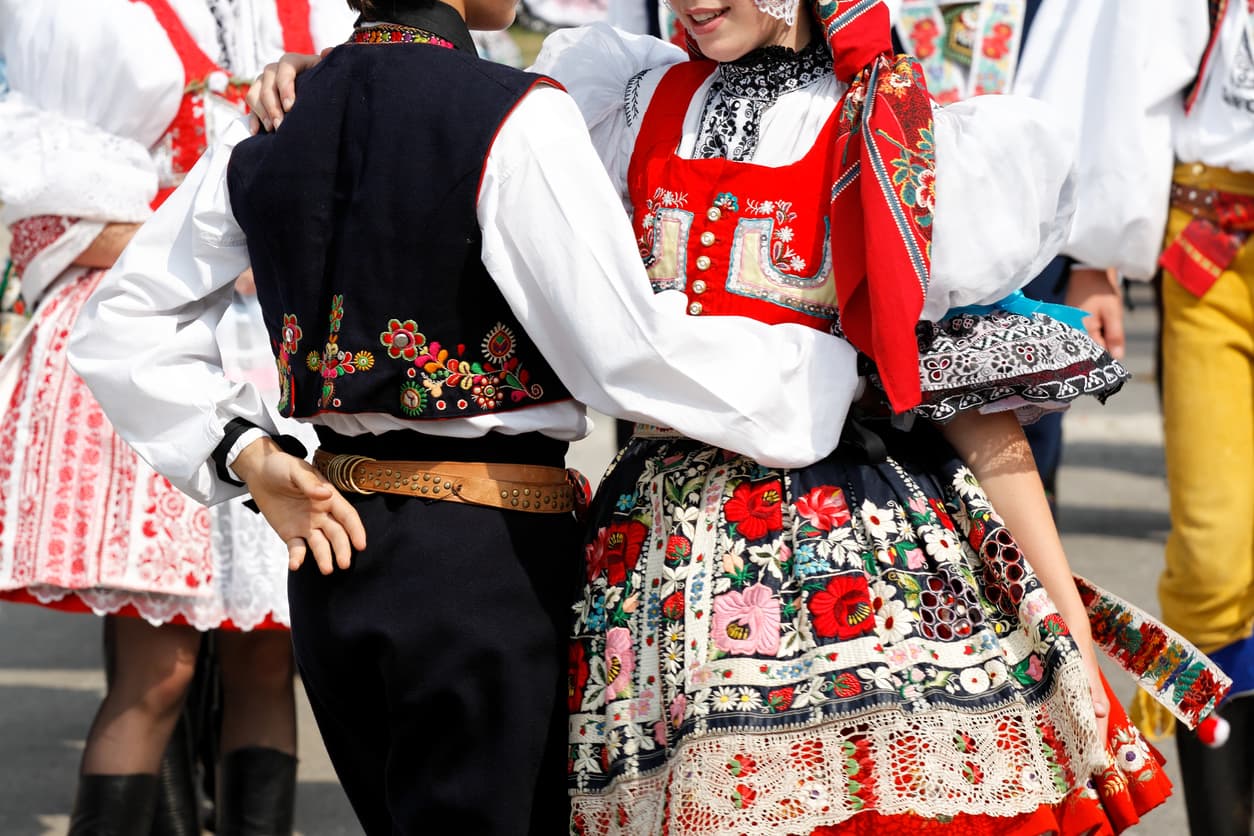

When moving to the Czech Republic, many migrants live in a parallel reality at first: something important is happening nearby, neighbors are carrying woven braids somewhere, shops are unexpectedly closed, colleagues put a cake in the kitchen for a completely unclear reason. To prevent all this from causing confusion, but instead to make it part of your new life, we have prepared a detailed guide to Czech holidays and traditions.
Public Holidays
Official holidays in the Czech Republic are established at the state level and give citizens the right to rest. There are 13 of them in total. Here is a complete table with Czech names — you will need them:
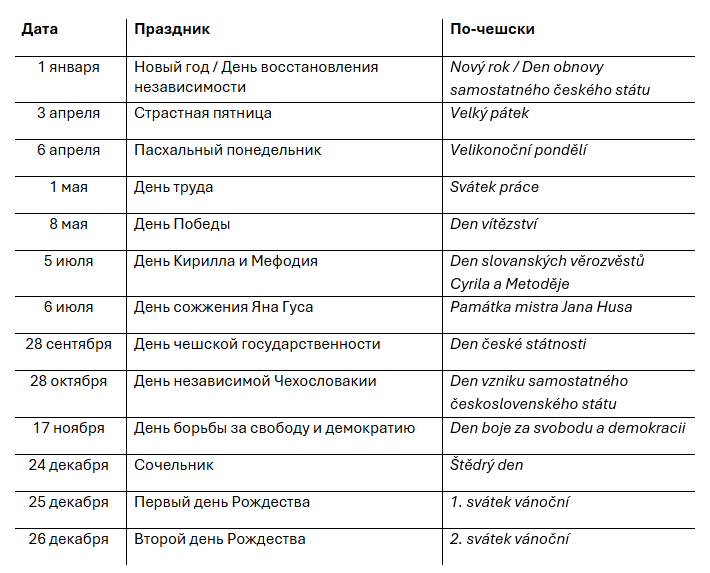
2026 will be generous with long weekends: out of 13 public holidays, 11 fall on weekdays. Easter will give a four-day weekend — from April 3 to 6, May 1 and May 8 both give three-day weekends, and Christmas — again for four days in a row: from December 24 to 27.
What is Closed on Holidays
In the Czech Republic, owners set their own store operating hours, except on public holidays when sales are prohibited by law. However, this applies only to stores with a retail area of over 200 m²: all supermarkets, hypermarkets, and large hardware stores.
When exactly large stores close in 2026: January 1, April 6 (Easter Monday), May 8, September 28, October 28, December 25, and 26.
Exceptions include stores at train stations, airports, and gas stations, as well as pharmacies — they are usually open. Small stores (grocery stores, family shops) may also be open — this is at the owner's discretion.
Your Rights as an Employee on a Holiday
The decision to work during public holidays is made by each company independently. However, if you are still called to work on a holiday, the employer is obliged to pay for this day at an increased rate.
According to the Labor Code of the Czech Republic, work on public holidays is generally prohibited, except in cases where it is provided for by a shift schedule, is necessary in continuous production, is carried out in the healthcare, transport, energy, police sectors, etc., is related to emergency work, or is performed in retail trade with appropriate restrictions.
Compensation is made either by double pay or by granting an additional day off — only with the employee's consent. Example calculation: if you receive 160 CZK per hour, then for each hour worked on a holiday, you should receive 320 CZK.
Folk and Religious Traditions
Easter (Velikonoce)
Easter is perhaps the first thing that truly shocks foreigners. Especially those who come from countries where this holiday is celebrated quietly and religiously.
Easter (Velikonoce) is a traditional Czech holiday that has lost its religious significance for most residents of the country. However, many Easter traditions and rituals are still observed, and Easter remains an important family holiday.
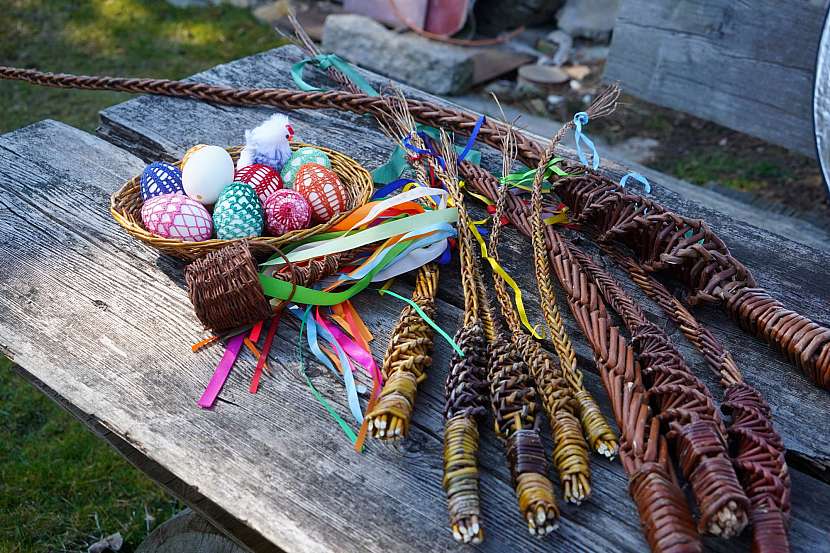
The main character of Czech Easter is the pomlázka: a woven whip made of willow branches, with which men symbolically whip women on the legs. According to folk belief, such "whipping" helps a woman stay young and beautiful — she is infused with the strength and freshness of a young branch. And to buy off this procedure, girls offer painted Easter eggs and sweets to the suitors. There is also a corresponding custom — girls douse boys with water.
It sounds strange, but it is perceived as a kind and fun tradition, not as something offensive. If on Easter Monday neighborhood children knock on your door with whips — know that this is normal and even cute. The traditional response is to treat them to chocolate or eggs.
Especially in Moravia, where the tradition of homemade brandy production is alive, caroling with pomlázka is popular among men of all age groups.
Christmas (Vánoce)
Christmas is the most beloved holiday in the Czech Republic. It begins with Advent, which in Latin means "coming," and on December 24, Christmas Eve arrives — Štědrý den (Generous Day).
The symbol of the Advent period is a wreath with four candles (adventní věnec). On the first of the four Sundays of Advent, the first candle is lit, on the following week — the second, and so on. During this time, Christmas markets open in cities, and the air smells of trdelník and mulled wine.
A few things that are important to know about Czech Christmas:
Carp instead of Olivier salad. For Christmas Eve dinner, Czechs serve fried carp — for them, it's the same as Olivier salad for New Year's. According to tradition, to always have money in your wallet, fish scales are placed in it. Carp are sold on the street in December — live, from special barrels.
Ježíšek instead of Santa Claus. The main character of the holiday is Ježíšek — the baby Jesus. He is the one who hides gifts under the Christmas tree.
Christmas tree — only on Christmas Eve. The Christmas tree in Czech homes is traditionally decorated on December 24, just before Christmas.
A home holiday, not a street one. Christmas is purely a home holiday. Czechs spend the whole night at the table with their families.
Before Christmas, they bake Vánočka — a sweet bread with raisins and almonds. It is a beautiful braided loaf sold in all bakeries — be sure to try it.

St. Nicholas Day (Mikuláš)
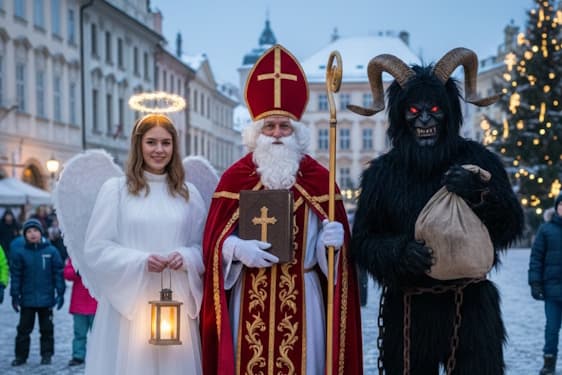
On December 6, St. Nicholas Day (den Svatého Mikuláše) is celebrated. In the evening of the 5th, trios walk through the streets: Mikuláš (a bishop), an angel, and a devil. Children receive sweets from the angel if they behaved well — or coal from the devil if they didn't. Publicly on December 5–6, Mikuláš gives gifts, and Ježíšek hides them under the Christmas tree.
Carnival — Czech Masopust
The custom of celebrating and drinking at the end of winter came to the Czech Republic in the 13th century from Germany. In Moravia, instead of the word "masopust," they say "fašank" — from the German Fasching. A week full of boisterous fun begins with "Fat Thursday" (Tučný čtvrtek).
Unlike Shrovetide, in Masopust, they do not burn a straw effigy of winter and do not bake pancakes. The two main components of modern celebration are a parade in carnival costumes and generous feasts. Traditional dishes include homemade pork sausage jitrnice, blood sausage jelito, roasted pork, and doughnuts — koblihy.
Masopust is a rural tradition, but in recent years it has been actively revived in large cities as well. In Prague, for example, a carnival has been held in the Žižkov district since 1933.

Burning of Witches (Pálení čarodějnic) — April 30
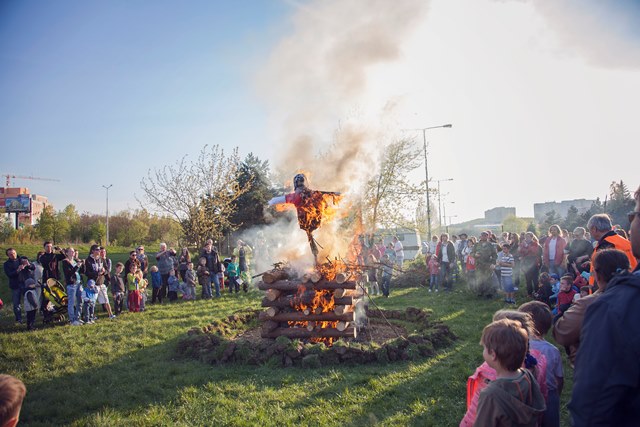
On the night of April 30 to May 1, bonfires are lit throughout the Czech Republic. This is a celebration of the arrival of spring and farewell to winter. A witch effigy — a symbol of winter and evil — is burned on the bonfires. Families and groups of friends gather in yards, parks, and at the edge of the forest. They grill sausages, drink beer, and light bonfires.
For a migrant, this is a great opportunity to get to know neighbors — many community courtyards organize joint celebrations. Do not hesitate to join if you are invited.
St. Martin's Day (November 11)
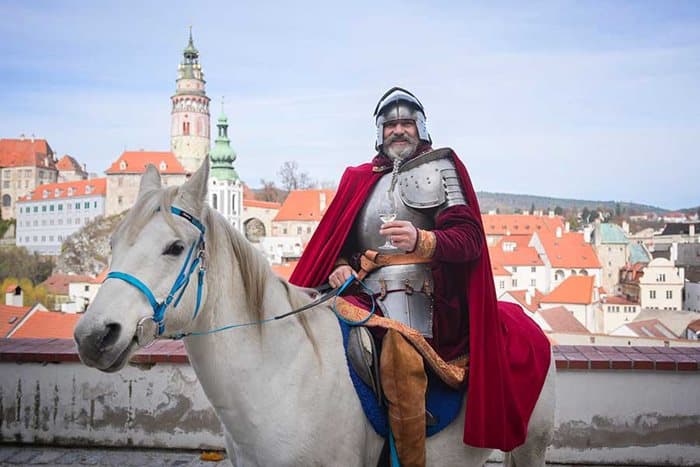
November 11 is an unofficial but very beloved holiday. Traditionally, on this day, svatomartinské víno — young wine from the current year's harvest — appears on the shelves. They say that St. Martin "arrives on a white horse" — meaning the first snow falls on this day. Restaurants and wine shops specifically prepare for this date.
Name Days — a Tradition Migrants Learn About Last
One of the most touching and practically important nuances of Czech life is name days. In the Czech calendar, each day is assigned a specific name. Name days are celebrated with less fanfare than birthdays, but are still considered an important family event.
At the workplace, it looks like this: in the morning, a colleague brings a cake or pie, puts it in the kitchen, and treats everyone. This is a good tradition worth maintaining — when your name day comes, do the same, and it will immediately earn you points in the eyes of your Czech colleagues.
How to find out when your name day or a colleague's name day is? Visit any Czech online calendar (for example, kalendar.beda.cz) — a name is attached to each day there. Congratulating a colleague on their name day in Czech is very simple: „Všechno nejlepší k svátku!" ("All the best on your name day!").
Everyday Traditions
Beer is Culture, Not Just a Drink
Beer in the Czech Republic is a special phenomenon. In 2024, Czech beer culture was officially included in the List of Intangible Cultural Heritage of the Czech Republic, emphasizing its exceptional value. Beer pubs and restaurants have historically been and remain places for meetings, informal communication, and strengthening social bonds.
Friday beer with colleagues after work is almost a ritual. If you are invited — go. This is an important part of how Czechs build human relationships. A few rules at the table:
When clinking glasses, look your interlocutor in the eye — this is mandatory.
Do not start drinking before the toast.
The traditional toast is „Na zdraví!" ("To your health!").
Workplace Traditions
In addition to name day cakes, there are other traditions at Czech workplaces:
Joint collections for a gift. Colleagues go on maternity leave, change jobs, or someone has an anniversary — it is customary to chip in for a joint gift. If someone approaches you with an envelope — this is it. The amount is symbolic, usually 100–200 CZK.
Corporate parties and vánoční večírek. A Christmas party is almost mandatory in many companies. It is an informal dinner for the entire team, often with small gifts drawn by lot.
Farewell cake. When someone leaves a job, it is customary to organize a small farewell with refreshments.
Dacha Culture
To understand the Czech mentality, it is very important to know about chata (dacha, small house) and chalupa (country house). This is practically a national idea: a huge number of Czech families have a country house where they go on weekends and holidays. During long holiday weekends, Prague and other cities become noticeably emptier — everyone goes to their dachas.
Quiet Sundays and Respect for Peace
In the Czech Republic, Sunday is a day of rest in the truest sense. Making noise, doing renovations, or listening to loud music on Sundays (especially before 8 AM and after 10 PM) is considered extremely impolite. This rule also applies to many Saturday evenings.
A similar rule applies during polední klid — the midday quiet hour (approximately from 12:00 PM to 2:00 PM). In some houses and neighborhoods, this is stipulated in the rules of residence. Noisy work during this time is a direct path to conflict with neighbors.
Practical Advice for Migrants
Plan your shopping in advance. Before every major holiday, buy groceries at least a day in advance — this will save your nerves.
Learn the list of holidays for the whole year. Print or save the table of public holidays. This is especially important if you work a rotating schedule or plan trips.
Join the traditions. Congratulate a colleague on their name day, bring a cake on your name day, go for Friday beer. This is not required, but it is something that helps you become "one of them" much faster than any formalities.
Watch for changes. The holiday calendar in Czechia is stable, but the working schedules of shops and transport may change. Before holidays, check the schedule on the website of your shop or transport company.