
After February 2022, the Czech Republic became one of the EU countries with the largest number of Ukrainians relative to its own population. According to the Czech Ministry of the Interior, by the end of 2025, more than 613,000 citizens of Ukraine legally resided in the country — almost every second foreigner in the republic. The Czech Republic ranks first in the EU for the number of Ukrainian refugees per capita — 34.3 people per thousand inhabitants of the country.
Everyone arriving in the Czech Republic inevitably faces the question: in which city is it easier to start a new life? Where is it easier to find a job, rent affordable housing, and feel like part of the local community? In this article, we will compare in detail the four largest cities in the country (Prague, Brno, Ostrava, and Pilsen) based on key factors affecting integration.
Newcomers in the Czech Republic: An Overview
Foreigners currently make up 10.3% of the Czech Republic's population. This is a significant figure for a Central European country that, just two decades ago, was considered quite ethnically homogeneous.
The structure of the foreign population by main nationalities is as follows:
Ukrainians — 613,000 people (over 53% of all foreigners)
Slovaks — over 125,000 people (~11%)
Vietnamese — about 70,000 people (~6%)
Russians — about 37,500 people (~3.5%)
Of the 613,000 Ukrainians, about 393,000 have temporary protection status (received after the full-scale invasion began in 2022). Over 150,000 Ukrainians have already found permanent jobs in the Czech Republic.
Prague — Maximum Opportunities, Maximum Expenses
General Atmosphere
Prague is the capital and the most international city in the Czech Republic. The population is about 1.4 million people, of whom foreigners make up more than a third of all newcomers in the country. It is easiest to feel comfortable here without knowing Czech: English is used everywhere — in shops, cafes, and transport.
Labor Market
Prague offers the largest number of vacancies in the country. Major international companies have their offices here, and the IT sector, services, tourism, and finance are actively developing. The average nominal salary in the third quarter of 2025 for the Czech Republic was 48,295 CZK, but in Prague, this figure is traditionally higher than the country's average. Salary growth of 5–7% is predicted for 2026. At the same time, competition for good positions is the highest here.
Housing Prices
Housing in Prague is the most expensive in the Czech Republic. Renting a one-room apartment (1+kk) costs an average of about 16,700 CZK per month. A typical apartment with an area of 65 m² rents for an average of 27,876 CZK. In the first quarter of 2025, the average rental rate in Prague was 429 CZK per square meter — the highest figure in the country.
Prague is suitable for:
Specialists in IT, finance, marketing, and other office-based fields.
People with good knowledge of English.
Those who value an international environment and broad cultural opportunities.
Families for whom developed infrastructure for children is important.
Cons of Prague:
The highest housing rental prices in the Czech Republic.
High competition in the job market.
High overall cost of living.
Traffic congestion during peak hours.

Brno — A Student City with Growing Opportunities
General Atmosphere
Brno is the second-largest city in the Czech Republic with a population of about 400,000 people. It is a major university center, with over 80,000 students, including thousands of foreigners. Due to the large number of foreign students and IT professionals, English is used in Brno much more often than in most other Czech cities. The city is calmer than Prague, yet quite dynamic and modern, with a friendlier atmosphere.
Labor Market
Brno is actively developing as a technology hub: hundreds of IT companies, startups, and research centers have opened offices here. The university and academic sector are also well-developed, creating demand for qualified specialists. Salaries in Brno are lower than in Prague, but significantly higher than the Czech average.
Housing Prices
Rent in Brno is noticeably lower than in Prague. The average rental rate in the first quarter of 2025 was 329 CZK per square meter. For comparison, a studio or one-room apartment costs about 13,000 CZK per month. In recent years, prices have been rising, so the gap with Prague is gradually narrowing.
Brno is suitable for:
IT specialists, engineers, scientists.
Students and young professionals.
Those seeking a balance between opportunities and cost of living.
Families with children (affordable prices with good infrastructure).
Cons of Brno:
Housing prices have been rising rapidly in recent years.
The job market is smaller than in Prague.
Ostrava — Affordable, Practical, for Skilled Trades
General Atmosphere
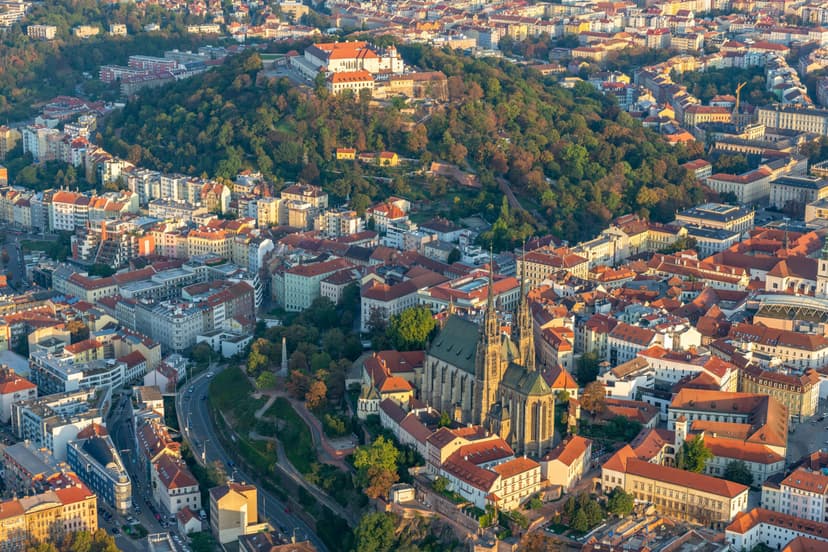
Ostrava is the third-largest city in the Czech Republic with a population of about 280,000 people. Historically, it is the industrial center of the country. Life here is significantly cheaper, with fewer tourists and less hustle and bustle. The city is actively transforming: former industrial areas are being turned into cultural spaces.
Labor Market
The labor market in Ostrava is mainly focused on industrial specialties: manufacturing, logistics, construction, and metallurgy. It is possible to find a job here quickly, especially if Czech language skills are not required — many factories are willing to hire foreigners. Salaries are lower than in Prague, but with local prices, the standard of living remains acceptable.
Housing Prices
Ostrava is one of the most affordable cities for renting housing. A one-room apartment (1+kk) costs an average of about 8,930 CZK per month — almost half the price of Prague. A 2+kk apartment costs about 11,300 CZK.
Ostrava is suitable for:
Workers in skilled and technical trades.
Those looking for the most affordable housing.
People ready for a calmer pace of life.
Those arriving without knowing Czech (for production jobs).
Cons of Ostrava:
Less of an international environment, the language barrier is felt more strongly.
Lower salaries than in Prague and Brno.
Fewer vacancies for office and IT specialists.
Pilsen — An Industrial Center Near Germany
General Atmosphere
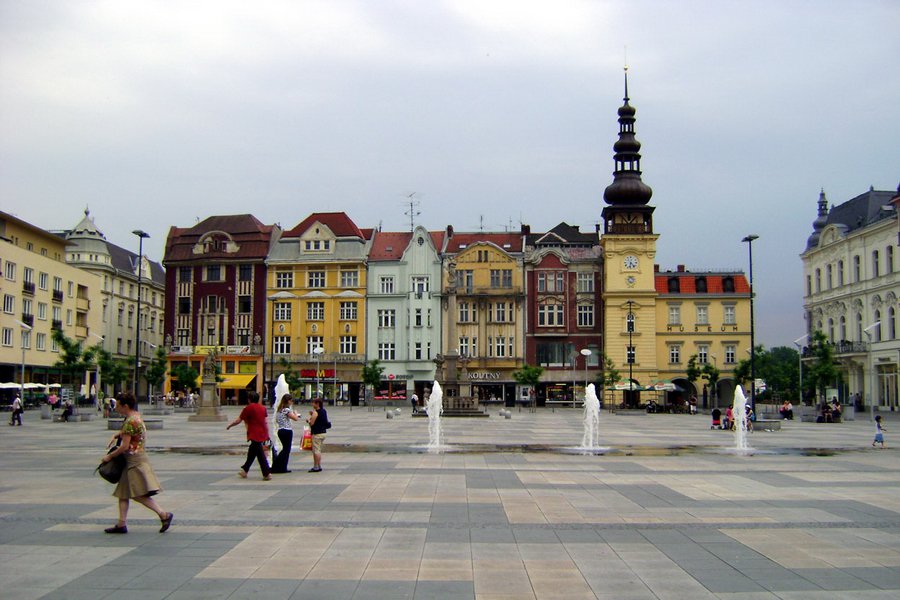
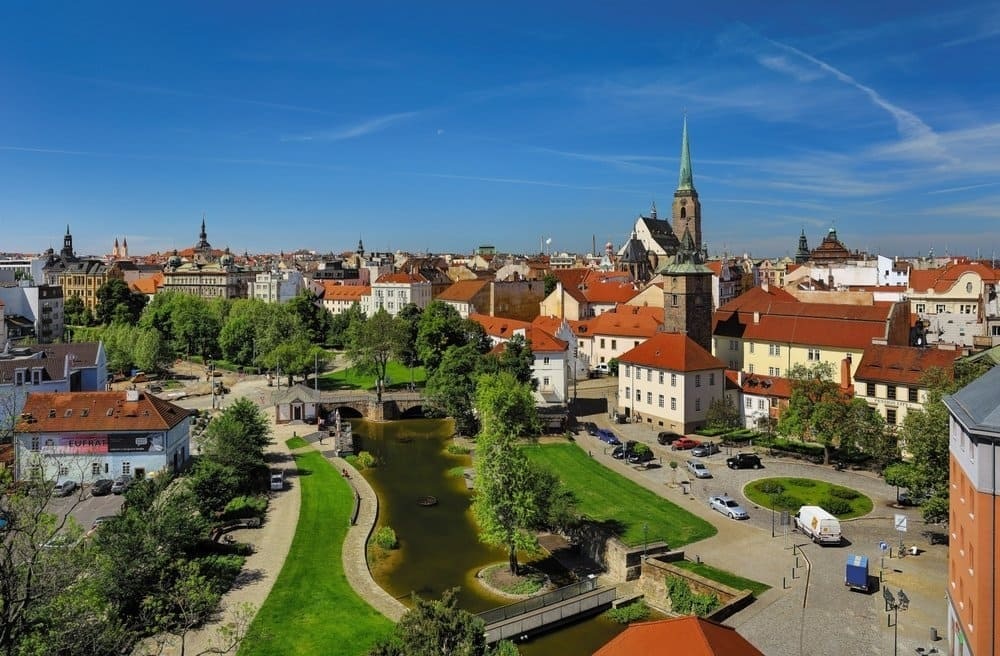
Pilsen is a medium-sized city (about 175,000 inhabitants) in West Bohemia, a few hours' drive from Germany. It is an industrial and cultural center with a rich history; it is here that the famous Pilsner Urquell beer is produced. Due to its proximity to the German border, Pilsen traditionally has many international workers. The Ukrainian community in West Bohemia is well-organized and is one of the largest in the region. The proximity to the German border means that German is understood here — this can be an advantage for those who know it.
Labor Market
Pilsen is an important center for mechanical engineering and manufacturing. Large international companies operate here. The labor market is primarily focused on specialists in the industrial sector, engineers, and skilled workers. Competition for jobs is noticeably lower than in Prague.
Housing Prices
The average rental rate in Pilsen is about 282 CZK per square meter — lower than in Prague and Brno, but higher than in Ostrava. This makes the city a good compromise between price and quality of life.
Pilsen is suitable for:
Workers in the manufacturing and industrial sectors.
Families looking for a balance between housing costs and environmental quality.
Those considering moving to Germany in the future.
Specialists in engineering fields.
Cons:
Less dynamic job market in IT and office sectors.
Fewer cultural opportunities compared to Prague and Brno.
English is less common than in the capital.
Where and What Kind of Work is Easiest to Find
The choice of city largely depends on your profession. Here is a short guide:
-
Prague: IT, programming, marketing, finance, tourism, services, medicine
-
Brno: IT, engineering, research, education, technology startups
-
Ostrava: manufacturing, metallurgy, logistics, construction, warehouse work
-
Plzeň: mechanical engineering, manufacturing, engineering, transport
According to Czech statistics, the highest salary growth in 2026 is expected in the IT sector, healthcare, and education. More than two-thirds of companies in the Czech Republic plan to increase employee salaries — in most cases, this will be an increase of up to 5%.
Tips Before Choosing a City
Before making a decision, we recommend answering a few important questions:
-
Check the job market in your profession. Look at current job openings on the portals Jobs.cz, Práce.cz, and Indeed.cz. Pay attention to the number of offers in your specific field in each city.
-
Estimate the real housing prices. Look at current offers on Bezrealitky.cz, Sreality.cz, or UlovDomov.cz — and compare them with your expected salary.
-
Find out about your diaspora in the city. An active Ukrainian community provides access to mutual help, information, and psychological support in the first months.
-
Consider transport accessibility. All four cities are well connected to each other and to other regions of the Czech Republic. A train trip from Prague to Brno takes about 2.5 hours.
-
If you have children — learn about the education system. Public schools in the Czech Republic accept children of foreigners for free. Prague and Brno have more schools that support Ukrainian-speaking children.
There is no universal advice — each city offers its own advantages depending on your circumstances and goals.
If you are an IT specialist, manager, or work in an office environment — Prague or Brno will offer the most career opportunities. If you are a blue-collar worker, a technical specialist, or looking for a quick start without a language barrier — Ostrava or Plzeň will provide employment and affordable housing. If you are coming with your family and value a calm environment with reasonable prices — Brno or Plzeň will be the optimal choice.
Whichever city you choose, remember: the most important thing is to start. The Czech Republic offers broad opportunities for legal residence, work, and gradual integration. And over time, any of these cities can become a real home.