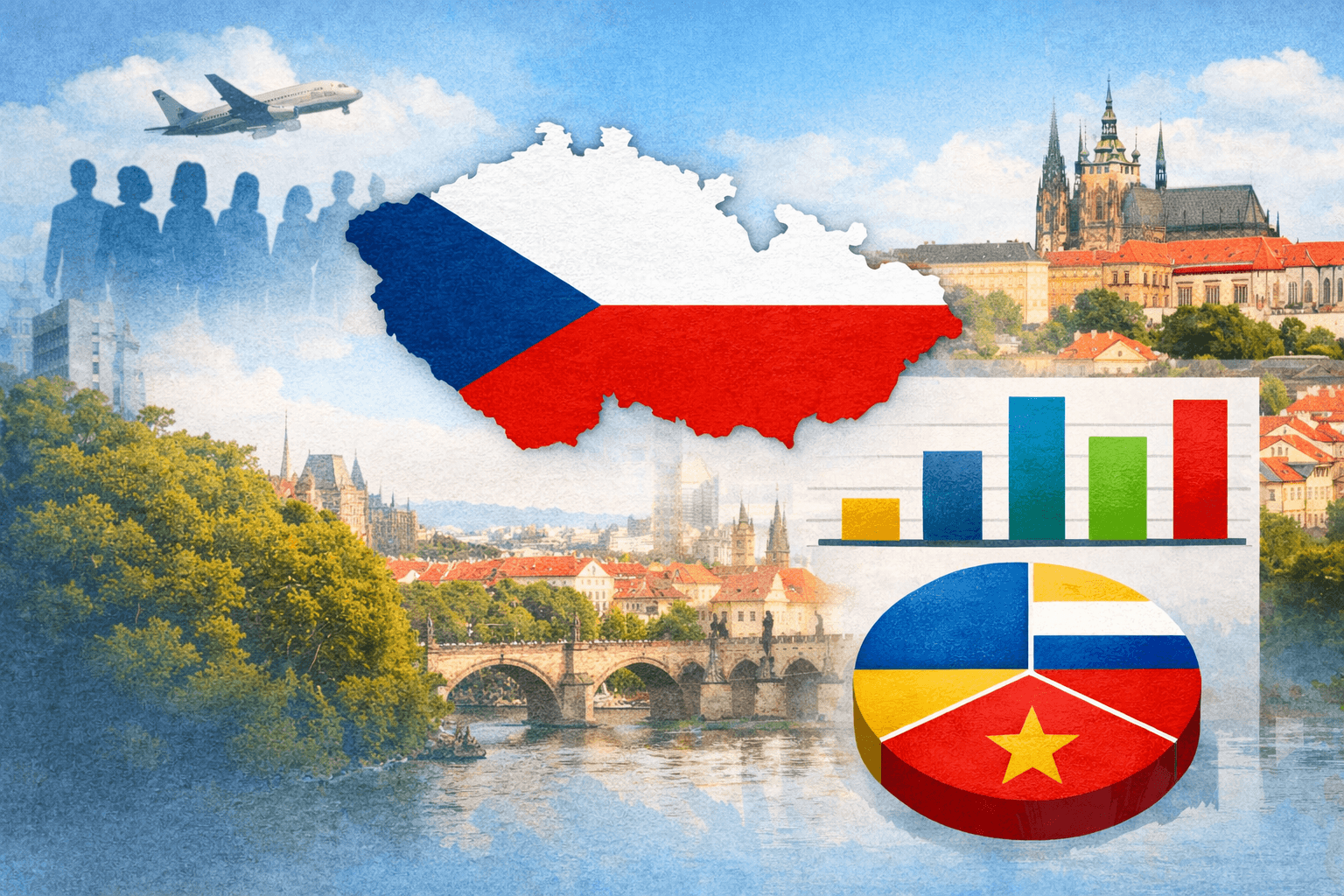


When people talk about labor migration in Europe, Germany, Austria, and the Scandinavian countries often come to mind first. The Czech Republic is often overlooked – and quite unfairly. In terms of employment, it is among the leaders in the European Union, the economy is growing steadily (about 2.1% GDP in 2025), and the labor shortage is so acute that the state is purposefully expanding channels for legal employment of foreigners.
Every year, about 40,000 people of working age leave the Czech Republic: more people retire than new people enter the labor market. This is not a temporary turbulence, but a structural demographic problem that cannot be solved without attracting workers from abroad. For a migrant, this means one thing: you are needed here – especially if you have qualifications or are willing to work with your hands.
General Labor Market Overview
As of early 2026, the unemployment rate in the Czech Republic is about 5.1–5.2% – this is the seasonal peak before spring, after which the rate traditionally decreases. For comparison, the average European level is noticeably higher. In 2023, the employment rate in the Czech Republic was 75.1% – 4.7 percentage points higher than the EU average.
As of 2026, the country continues to experience a shortage of over 200,000 specialists, especially in engineering, manufacturing, logistics, and healthcare sectors. At the same time, there are consistently many vacancies in the market: in February 2026, about 89,700 open positions were registered.
According to the ManpowerGroup Employment Outlook Survey, employer optimism about hiring in the first quarter of 2026 was +20% – an increase of 9 percentage points compared to the same period last year.
Foreign workers have long been an integral part of the Czech economy. Today, they make up almost 15% of the country's entire workforce. According to the Ministry of Labor and Social Affairs, last year 935,000 employment relationships involving foreign workers were registered in the Czech Republic – an 11% increase compared to the previous year. The largest group is citizens of Ukraine, almost 360,000 people.
In-Demand Professions: Who is Needed Right Now
The shortage of staff in the Czech Republic is uneven. Some sectors have almost no shortage, while others have a chronic lack. Let's look by sector.
Industry and Manufacturing
The Czech Republic is an industrial country with strong automotive, mechanical engineering, and electronics sectors. Škoda Auto, Toyota, Bosch, Siemens, Foxconn, and dozens of other major manufacturers operate here. Mechanical, electrical, and manufacturing engineers are in particularly high demand in the automotive and mechanical engineering sectors – primarily in Prague, Brno, and Ostrava.
Not only engineers are needed. CNC machine operators, welders, mechanical fitters, production line workers – these are all positions with constant demand and a relatively low language entry barrier. Many companies are willing to hire foreigners without Czech language skills, especially if they have manufacturing experience.
Construction and Crafts
The staff shortage is particularly noticeable in skilled construction trades – this is a structural problem in the industry. Architects, civil engineers, plumbers, welders, and electricians are needed for large-scale infrastructure and housing projects across the country.
Builders, tilers, roofers, painters – all these professions are in steady shortage. It is important to understand: Czech construction operates according to European quality and safety standards, so experience is valued, and the ability to work carefully is even more so.
Medicine and Healthcare
This is perhaps the most acute shortage. According to the Ministry of Labor of the Czech Republic (MPSV) and the Czech Statistical Office (ČSÚ), the healthcare sector lacks up to 15,000 workers – doctors, nurses, pharmacists, and care specialists are among the most sought-after professions.
An aging population and the expansion of the social care system create a constant demand for caregivers, assistants for the elderly, and people with disabilities. This area is particularly accessible for migrants: it does not require lengthy diploma nostrification, professional skills and basic Czech for communication with patients are sufficient.
Doctors and nurses with diplomas will have to go through the qualification recognition process, but the state is so interested in these specialists that the process is gradually being simplified.
IT and Technology
IT remains the fastest-growing sector in the Czech Republic. Companies are looking for specialists in cybersecurity, software development, data analysis, and UX/UI design. The list of in-demand specialties includes artificial intelligence specialists, renewable energy engineers, and cybersecurity experts.
Prague has long become one of the leading technology hubs in Central Europe. It hosts offices of international companies, a startup ecosystem, and research centers. IT is the sector where foreigners are usually in the most comfortable position: English is the working language here, and professional skills are more important than citizenship.
Transport and Logistics
Truck drivers (categories C and CE), warehouse equipment operators (forklifts, reach trucks), freight forwarders – demand for these positions is stable and geographically distributed throughout the country. Demand in logistics continues to grow. To work as an international truck driver, a Driver CPC card is required, but if you have a Ukrainian or Belarusian document, mutual conversion is possible.
Hospitality and Food Service
The tourism sector – Prague remains one of the most visited cities in Europe – constantly needs staff: cooks, waiters, administrators, maids. The language barrier is lower here, staff turnover is high, but there are more opportunities for a quick start. A good cook with experience in a professional kitchen will definitely not be without offers in the Czech Republic.

Salaries
Talking about money is always talking about expectations. To make them match reality, it is important to understand that there is a fundamental difference between the average and median salary in the Czech Republic.
According to official data from the Czech Statistical Office, the average salary in the Czech Republic in 2026 is 48,295 CZK per month gross – this is about 1,985 EUR. The median salary is 42,901 CZK: this is what a "typical" employee earns, without the influence of high earnings of top managers. The median figure more honestly reflects the situation of the majority.
The minimum wage in 2026 is 22,400 CZK per month (about 920 EUR). After deducting taxes and social contributions (about 25–30% of gross), an average employee takes home approximately 34,000–35,000 CZK.
The range across industries and professions is very significant. Here are approximate gross salary figures for the main sectors:
IT and Technology – the undisputed leader in remuneration. A software developer with 2–5 years of experience earns an average of 55,000–80,000 CZK per month, an experienced senior specialist – 90,000–120,000 CZK and above. Specialists in cybersecurity, data analysis, and AI are among the most in-demand and, consequently, highly paid.
Healthcare – therapists earn an average of about 47,000 CZK, nurses with specialization – about 57,000 CZK. Dentists – about 41,000 CZK.
Engineering and Manufacturing – a mechanical or electrical engineer with experience can expect 45,000–65,000 CZK, an experienced production technologist – 50,000–70,000 CZK.
Construction – a skilled construction worker earns 30,000–55,000 CZK, a master plumber or electrician – 35,000–50,000 CZK.
Transport – a truck driver on international routes: 40,000–55,000 CZK, often more with per diems.
Service and HoReCa sector – 27,000–38,000 CZK, in tourist areas of Prague – noticeably higher with tips.
Warehouse logistics and unskilled labor – 25,000–35,000 CZK.
Prague vs. Regions
The capital is a separate story. The average salary in Prague is about 55,000 CZK – almost 15% higher than the national average. Headquarters of international companies, technology offices, and the financial sector are concentrated here. But the cost of living is also higher: renting a one-room apartment in Prague costs 18,000–25,000 CZK per month, while in the regions (Brno, Ostrava, Pilsen) it is 12,000–16,000 CZK.
Salaries are lower in the regions, but the gap between income and expenses often favors the provinces. For migrants who want to save rather than just make ends meet, regional cities are a perfectly decent alternative to the capital.
Real Purchasing Power
To make the numbers come alive: the average grocery basket per person per month is about 7,000–9,000 CZK, a public transport pass in Prague is about 550 CZK, lunch in a inexpensive cafe is 150–200 CZK. Real incomes in the Czech Republic are growing: in 2025, real wages increased by 4–5% with inflation around 2–2.5%. The Czech Republic was among the EU leaders in terms of purchasing power growth.
Where Foreigners Compete and Where They Are In Demand
Where it is difficult for foreigners
The public sector – civil service, courts, prosecutor's offices, army – is closed to non-EU citizens. Czech or European citizenship is required here. Education in state schools also requires a high level of Czech language proficiency and recognition of teaching qualifications. Legal practice is impossible without a diploma from a Czech university or nostrification.
In general, the stronger the position requires fluent Czech and knowledge of local legislation, the higher the barrier for a foreigner. This is natural and fair – not specific to the Czech Republic, but the norm in any country.
Where foreigners are on equal footing
IT, international business, science and research, the financial sector of large companies – English is often the working language here. Companies are moving from traditional hiring to a skills-based approach. If you are a senior developer, data analyst, or cybersecurity specialist – your nationality matters much less than your portfolio and technical competencies.
International corporations with offices in Prague (Amazon, Oracle, Siemens, Accenture, DHL, and many others) form multicultural teams themselves and perceive foreign specialists as the norm, not an exception.
Where foreigners are especially needed
Manufacturing, construction, transport logistics, elderly care – these are the very sectors where Czechs are not eager to work (difficult, not prestigious, or simply no one available), and the shortage has long been structural. The Chamber of Commerce and Industry of the Czech Republic states a shortage of about a quarter of a million workers. In these industries, a foreigner is not a competitor to a local worker, but a welcome addition to them.
An Honest Look at Discrimination
It would be untrue to claim that foreigners are in ideal conditions in the Czech Republic. The starting salary of a migrant in practice is often lower than that of a Czech colleague with the same qualifications – due to lack of language skills or unconfirmed education. Diploma nostrification takes time. Lack of Czech language skills limits career growth in most fields, except IT.
But an important trend: when working legally, foreigners receive the same social guarantees as Czechs – paid vacation, sick leave, access to health insurance. The law is on the side of the employee, and this is not a declaration – it is a system that really works.

Main Options for Legal Residence
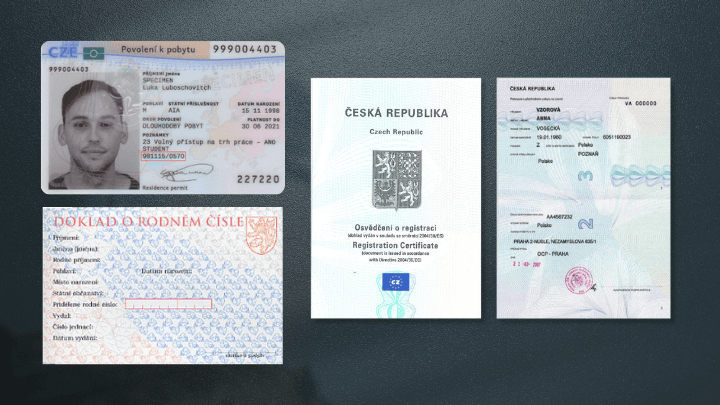
Employee Card (Zaměstnanecká karta) is the main document for most labor migrants from non-EU countries. It combines a residence permit and a work permit in one card, issued for the duration of the employment contract (no more than 2 years with the possibility of extension). It requires a specific job offer from a Czech employer. Every year, the Czech Republic issues over 70,000 employee cards, and by 2026, this number is expected to grow to 85,000+ due to the ongoing labor shortage.
EU Blue Card (Modrá karta) is for highly qualified specialists with higher education. It requires an employment contract for at least one year and a salary no lower than 1.5 times the national average (for IT specialists, the threshold is reduced to 1.2 times). It grants broader rights, including an accelerated path to permanent residency.
Entrepreneur's Card / Živnostenský list is for the self-employed and sole traders. It allows you to legally run a business or work as a freelancer. From September 1, 2025, a new government initiative to support self-employed foreigners (OSVČ) will be launched in the Czech Republic.
Student Visa + Work — full-time students at Czech universities have the right to work while studying. This is a good way to get a European diploma, learn the language, and establish yourself in the labor market at the same time.
After 5 years of continuous legal residence in the Czech Republic, a foreigner has the right to apply for permanent residency. Citizenship is possible after 10 years of residence, provided that a language exam and an exam on Czech history and culture are passed.
What is important to know before moving
Diploma Nostrification. If you plan to work in a profession that requires a recognized education (medicine, teaching, law, several technical fields), find out about the nostrification procedure in advance. Documents are submitted to the relevant ministry or university, and the process takes from several months to a year. You should start this process even before you move.
Czech Language. Without it, you can work in manufacturing or in an IT company with an English interface — but your career growth ceiling will be low. Knowing the language is the best investment for the long term. A level of A2–B1 already opens significantly more doors, and B2 practically removes limitations in most areas.
Where to look for a job. Main job portals: Jobs.cz, Profesia.cz, Prace.cz, Dobrá práce.cz, LinkedIn. For manufacturing and construction positions, look to specialized temporary staffing agencies (agenturní práce). The "Qualified Employee" program (Kvalifikovaný zaměstnanec) is a government program to attract employees from non-EU countries through specific employers. The official website of the Labor Office of the Czech Republic is Úřad práce ČR.
Agency Work: be careful. Working through temporary employment agencies (agentury práce) is a common practice, but it requires careful study of the contract. Legitimate agencies have a license from the Ministry of Labor. Illegal intermediaries pose a serious risk: without an employment contract, there are no social guarantees or legal grounds for residence.
Housing. Finding an apartment without knowing Czech and without a rental history is not easy. Many employers (especially in manufacturing) offer dormitory accommodation or help with housing — this is worth clarifying during negotiations about working conditions.
The Czech Republic is not a promise of an easy life. It is a country with a functioning labor market where a foreigner, with the right approach, can find their place faster than in many other EU countries. The structural labor shortage is not a temporary phenomenon but a demographic reality for years to come. The state understands this and is gradually simplifying the mechanisms for legal employment.
The key conditions for success are simple: legal status from day one, willingness to invest in learning the language, realistic expectations at the start, and patience during the first months of adaptation. For those who come with this set of qualities, the Czech Republic offers stability, salary growth, and a real prospect of staying for a long time.