
The first car fine in the Czech Republic is almost a rite of passage for new residents. Someone parked in a blue zone, not knowing it's only for residents. Someone paid at the parking meter but forgot to enter the number correctly. Someone thought everything is free on Saturday evening – and was wrong. This article is written so you can make these discoveries by reading, not by getting a fine.
Parking Zones
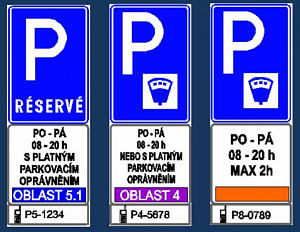
Czech cities with developed parking systems – primarily Prague and Brno – divide streets into paid parking zones (abbreviation: ZPS, or Oblast placeného stání — OPS). Each zone is marked with a colored stripe on the sign and road markings. The main rule: always look at the sign, because it shows the zone's operating hours, maximum parking duration, and its type.
The purpose of parking zones in Prague is to regulate parking in the interest of residents, so they can park near their homes, and visitors don't stay in the area longer than necessary. The entire city center is a paid parking zone. Let's look at the types by color:
🔵 Blue Zone (Residential)
Blue zones are easy to identify by the blue stripe on the traffic sign and blue markings on the road. Parking here is allowed only for residents with a valid permit. For everyone else – a maximum of 3 hours, payment only online via the Virtual Parking Hours or EasyPark app. There are no traditional parking meters in blue zones, and prices are higher than in purple and orange zones. Outside operating hours – free.
🟠 Orange Zone (Visitor)
The orange zone is for short-term parking – a maximum of 3 hours from 8:00 AM to 8:00 PM. The time may vary depending on the part of the city; exact hours are indicated on an additional sign. Payment is via parking meter or app. Outside operating hours – free.
🟣 Purple Zone (Mixed)
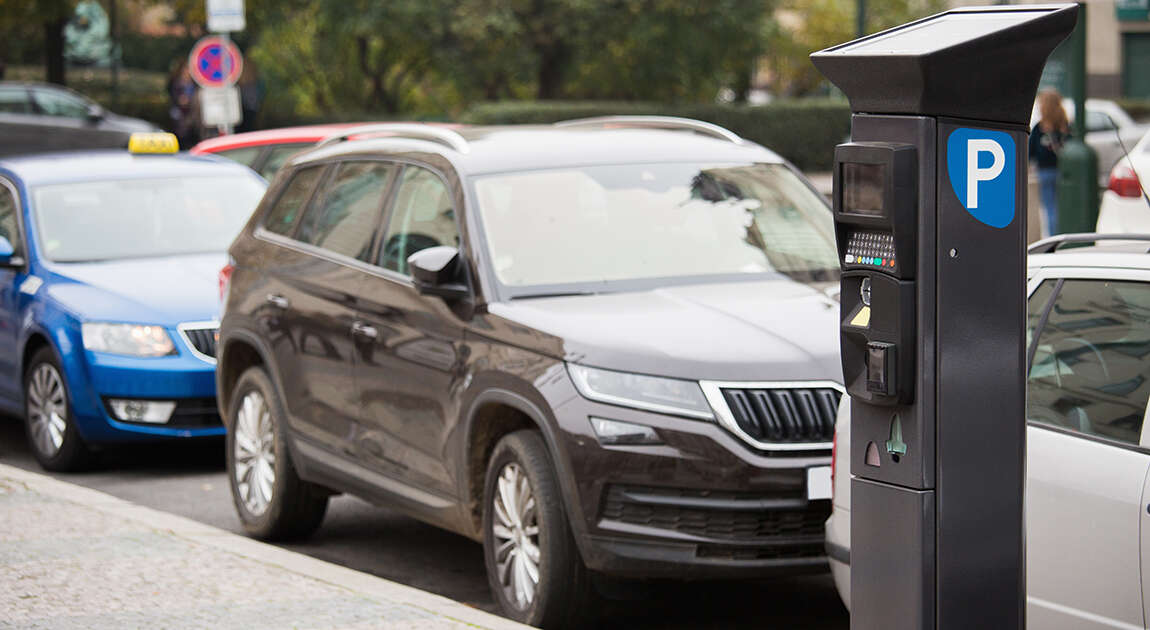
Purple and orange zones are equipped with parking meters. You can pay by card and cash coins, Czech crowns and euros are accepted. The mixed zone works for everyone: both residents and guests – with different rates and time limits. Parking is subject to payment on weekdays from Monday to Friday from 8:00 AM to 8:00 PM.
🟡 Yellow Line – Not a Zone, but a Prohibition
Parking in an area marked with a yellow line is strictly forbidden. Yellow lines mark exits from courtyards, bus stops, and taxi stands. Parking in such places very often results in the car being towed.
An important detail about the receipt: you don't have to put the payment slip under the windshield as before. The parking meter enters the car's license plate number directly into the electronic database. But this doesn't mean you can relax – you need to enter the number correctly, otherwise the payment will not be credited.
Rates
Depending on the zone, you have to pay from 40 to 80 CZK for each hour of parking: in the first sector – 80 CZK, in the second – 60 CZK, in the third – 40 CZK per hour. By European standards, this is quite moderate.
How to Pay for Parking: Parking Meter, SMS, App
Parking Meter (parkovací automat)
Parking meters are located in orange and purple zones. The principle of operation is simple:
Go to the nearest parking meter.
Select the language (English is available).
Enter your car's license plate number – exactly, including letters.
Select the parking time.
Pay with coins or a bank card.
Take the receipt – it may be needed as proof of payment, although the data is already in the database.
Czech crowns and euros are accepted for payment at parking meters. Parking meters usually do not give change, so have small coins ready or use a card.
Payment Apps
Apps are the most convenient way, especially because they allow you to extend parking remotely without returning to the car. Here are the main ones:
EasyPark – Prague's official online parking payment system. Works in a browser, without installing an app. It must be used for blue zones.
Citymove – an app for paying for parking in Prague's blue zones.
ParkDots – a popular app that works throughout the Czech Republic.
For apps, you need to register your car's license plate number and link a card. After that, payment takes literally 30 seconds. When paying via an online parking meter or mobile app, always check if your geolocation is determined correctly – otherwise, set the zone manually.
SMS Payment
In some cities and zones, you can pay for parking by SMS – the number to send to is indicated on the sign or at the parking meter. The message format usually includes the zone code and the license plate number. This method is less common than apps, but it can be helpful sometimes.
If the parking meter is broken, take a photo of it showing the time and try to find the nearest working one. In extreme cases, use online payment via browser or app. The fact that the parking meter is broken does not exempt you from payment.
Who Can Get a Resident Parking Permit
A resident permit (parkovací oprávnění — POP) gives the right to unlimited parking in the blue and purple zones of your district. This is the most important document for those living in the central districts of Prague or another large Czech city.
The permit is issued to a natural person who has a permanent residence in the area of paid parking zones. For migrants, the rules are as follows:
EU citizens living in the Czech Republic: present an ID card or passport. If the foreigner is not registered in the resident registry, a residence permit or a certificate of registration of an EU citizen is required.
Non-EU citizens (third countries): present a valid passport with a valid visa. If the foreigner is not registered in the resident registry – a residence permit (temporary or permanent) is required. Permit renewal is only possible in person at the issuing office.
What is Needed for Application
In addition to proof of residence, you need to prove your connection to the car. Standard package:
Valid passport + residence permit (for non-EU citizens)
Car document (technický průkaz / ORV)
If the car is registered abroad – ORV with an official translation into Czech (no translation needed for Slovak).
You can apply in two ways: in person at the parking permit issuing office in the relevant district or online through the Client Zone on the website parking.praha.eu. For non-EU citizens, permit renewal is possible only in person.
Official prices from the current Prague price list for 2025–2026:
For residents: first car – 1,200 CZK per year (in a small sub-area – 600 CZK). Second car – already 7,000 CZK per year. For the third and each subsequent car – from 24,000 to 36,000 CZK per year depending on the price zone. The system is progressive and deliberately makes the second and third cars in a family an expensive pleasure.
Residents over 65 years old and holders of a ZTP/ZTP-P card are entitled to a discount: the first car will cost only 360 CZK per year.
Brno: a resident permit in Brno costs 800 CZK per year for the first vehicle, 8,000 CZK for the second, and 12,000 CZK for the third and each subsequent one.
Important change from 2026
From January 1, 2026, free parking for low-emission vehicles in zones has ended. Now everyone pays. Electric and hydrogen cars registered in the system are entitled to a 50% discount. If you own an electric car, check if your car is registered to receive the discount.
Private Parking Lots, Underground Garages, and Park & Ride
Underground and Multi-story Parking Garages
In the centers of large Czech cities, there are many covered parking garages – they are usually located near shopping centers, hotels, or under squares. Everything is clear here: drive in, take a ticket, pay at the terminal or cashier when leaving. Prices are generally higher than on the street, but the car is under a roof and protected. You can conveniently find the nearest parking garage in Prague via the website parkopedia.cz.
Private Parking Lots
Private parking lots near shopping centers, residential complexes, and offices are a separate story. Here, the owner sets the rules. Typical situations:
Free parking for shoppers, provided the ticket is validated in the store.
Time limit (e.g., 2 hours), after which a fine is charged.
Disabled parking spaces near shopping centers are not considered public roads from a legal perspective, so the owner of the parking lot determines the rules there. Nevertheless, a car can be towed if the owner of the property wishes.
There are often cameras with license plate recognition in private parking lots. If you have parked longer than allowed, a payment demand will be sent to the car owner's address. Do not ignore it – it can be enforced through the court.
Park & Ride – A Smart Solution for Suburban Residents
The cost of P+R parking in Prague is 20 CZK per day. You need to drive through the barrier, park the car, and then find a parking meter on the parking lot. The price usually includes or offers a very cheap ticket for the metro or bus to the center. Such parking lots are located at the end stations of the metro and are convenient for those who live outside the paid zones.
How Not to Get a Fine
Prague has one of the strictest parking regulations in Europe, and the city authorities take violators seriously. Here are situations that most often end in trouble.
Situation 1: "I thought I could park in the blue zone – I paid at the parking meter."
No. There are no parking meters in Prague's blue zones. Payment in the blue zone is only possible online, and even then – for a maximum of 3 hours. Without a resident permit, you cannot stay here overnight.
Situation 2: "I paid for parking, but entered the license plate number incorrectly."
One extra letter or number, and your car is not listed as paid in the database. The inspector checks the database, not the receipt. The result is a fine. Always enter the license plate number carefully, especially if you have foreign plates with an unusual format.
Situation 3: "I was only there for five minutes."
The concept of "a quick stop" does not exist in strict zones. If the traffic sign prohibits stopping or parking, even a minute of parking is a violation. Never park for a quick stop in the city center. Observe a minimum distance of 5 meters before a pedestrian crossing.
Situation 4: "Everything is free at night – everywhere."
Not everywhere. Most orange and purple zones do indeed operate from 8:00 AM to 8:00 PM on weekdays. But in some zones, the operating hours are different – this is indicated on the sign. Before leaving your car overnight, make sure the sign allows it in your specific location. Especially in non-standard areas.
Situation 5: "I stopped at a K+R sign for a minute."
K+R (Kiss and Ride) are zones for dropping off/picking up passengers, usually near metro stations or schools. You cannot leave your car unattended there, not even for a minute.
Fines: Amounts, Payment, Appeals
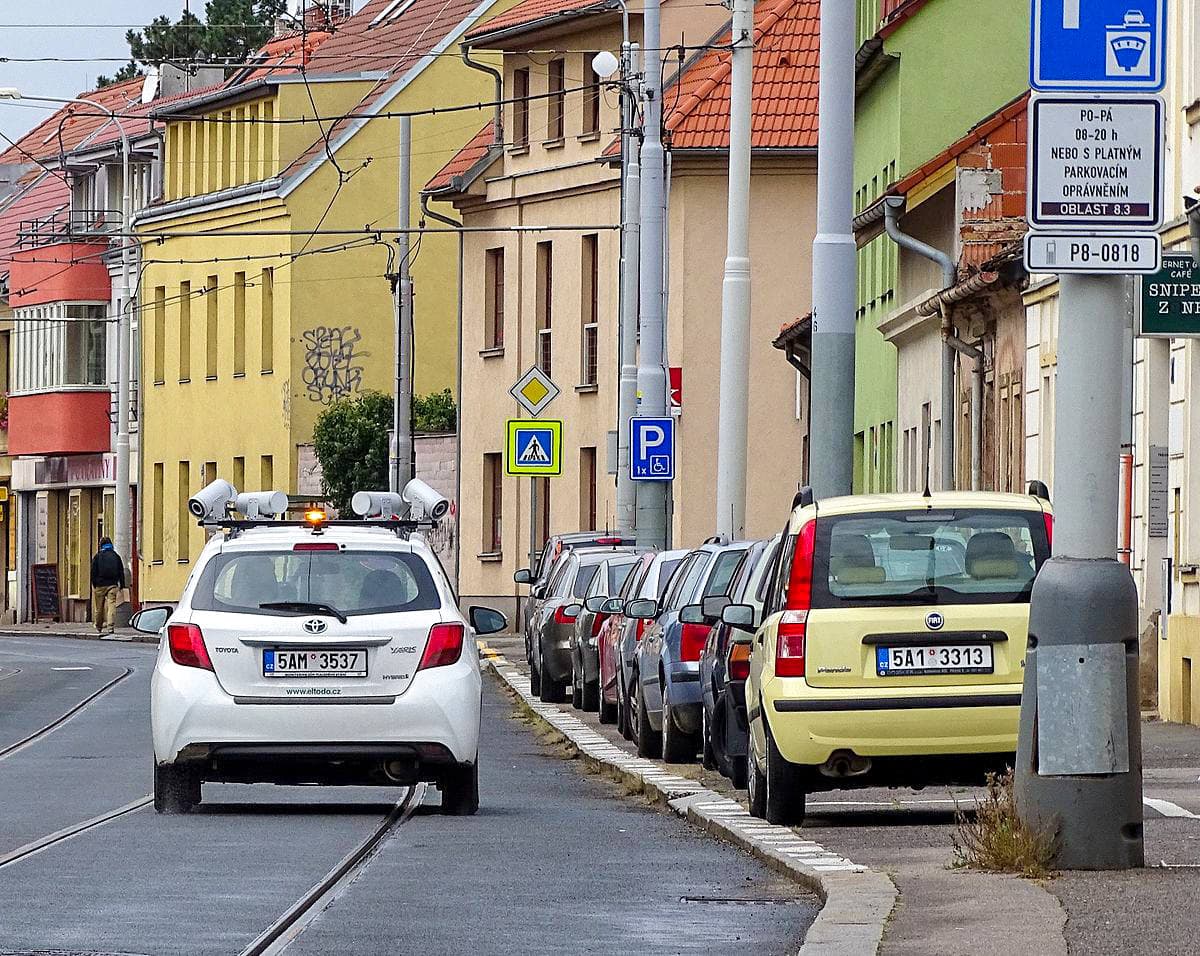
In the Czech Republic, parking is controlled by the municipal police (městská policie) and the state police (Policie ČR). In Prague and Brno, control is partly automated: special municipal police cars drive around zones and scan license plates. This means an inspector might not be visible, but your data is still recorded.
Also, unpaid parking time can lead to a so-called demand for payment of an increased tariff – about 500 CZK. This is not a classic fine, but a civil claim from the zone manager. If you do not pay on time, the case may go to court or lead to forced collection.
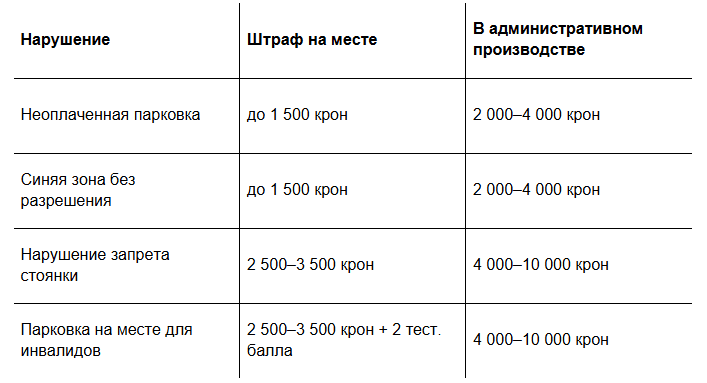
You can pay the fine on the spot with cash or card (if the inspector offers immediate payment), by bank transfer using the details on the receipt, or online via the provided QR code. Keep your payment receipt.
If you have valid reasons, you can appeal the fine. For example: an incorrectly installed sign, a technical error with the parking meter, or proven circumstances of force majeure. The fine may arrive with a delay – usually within 60 days, but in administrative proceedings – up to one year.
If you believe the fine is illegal, submit a written objection (odvolání) to the authority that issued the decision. The deadline is usually 15 days from the date of receipt. It is best to use the help of a Czech-speaking friend or a lawyer for this – errors in wording can cost you your case.
The parking system in the Czech Republic is well-designed, but it requires attention – especially from those who are new to the country. Here are a few final tips:
First, always read the sign before you get out of the car. It contains everything: zone type, operating hours, time limits.
Second, install one of the official apps before you enter a paid zone. Registration takes time.
Third, if you are a migrant living in the central district of Prague or Brno, get a resident permit as soon as possible: this will save you money and stress.
Fourth, in an unfamiliar city, it is better to spend 10 minutes learning the local rules than hours later searching for an towed car.
You can always find the current map of zones and tariffs for Prague at parking.praha.eu, and for Brno at parkovanivbrne.cz.